Shekhertek Eco-Tourism Center
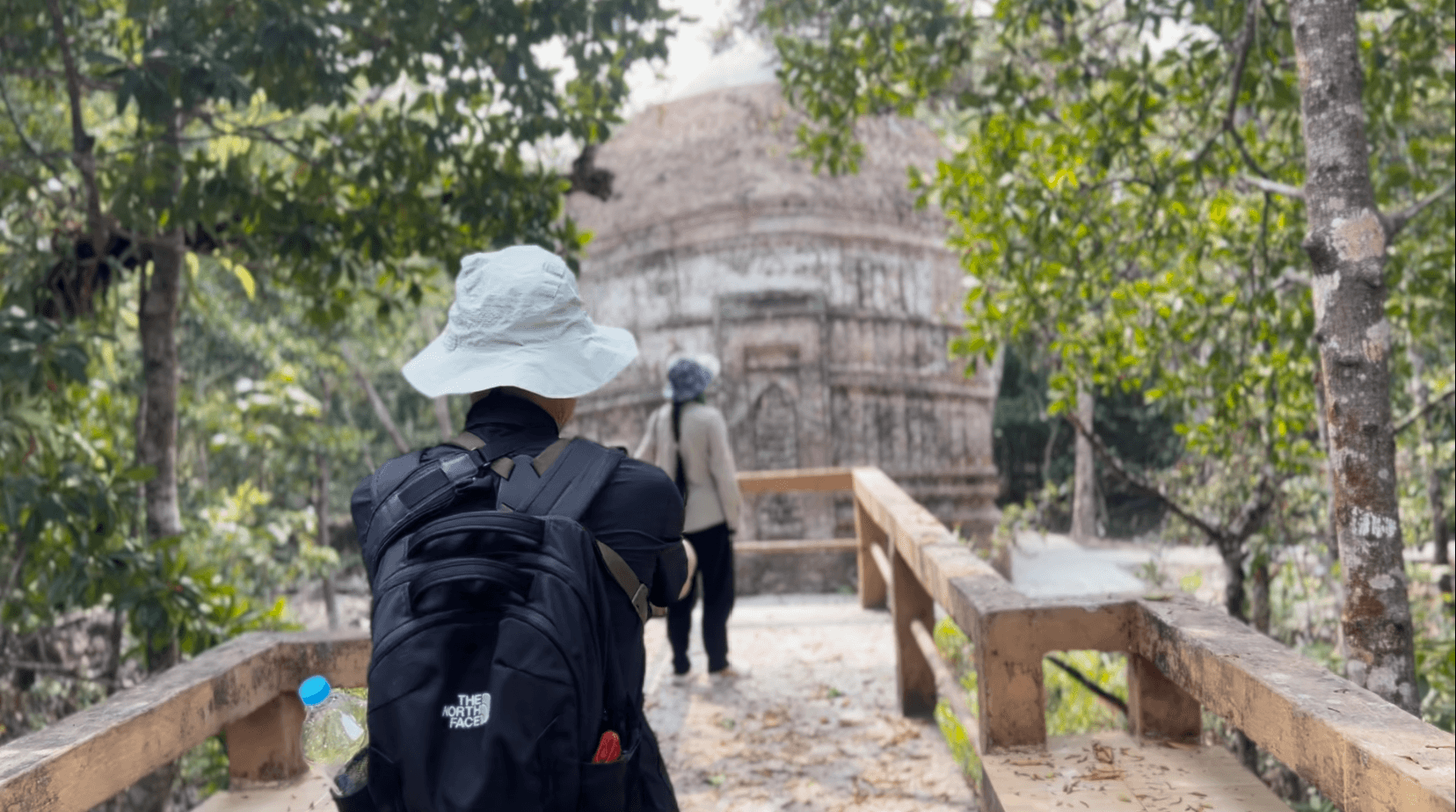
শেখেরটেক ইকো-ট্যুরিজম কেন্দ্রThe room standing among the gaab trees at Shekhertek is what's left of a defensive post built on a contested frontier and its position wasn't an accident.
Experiences at this Stop
Trail Walk
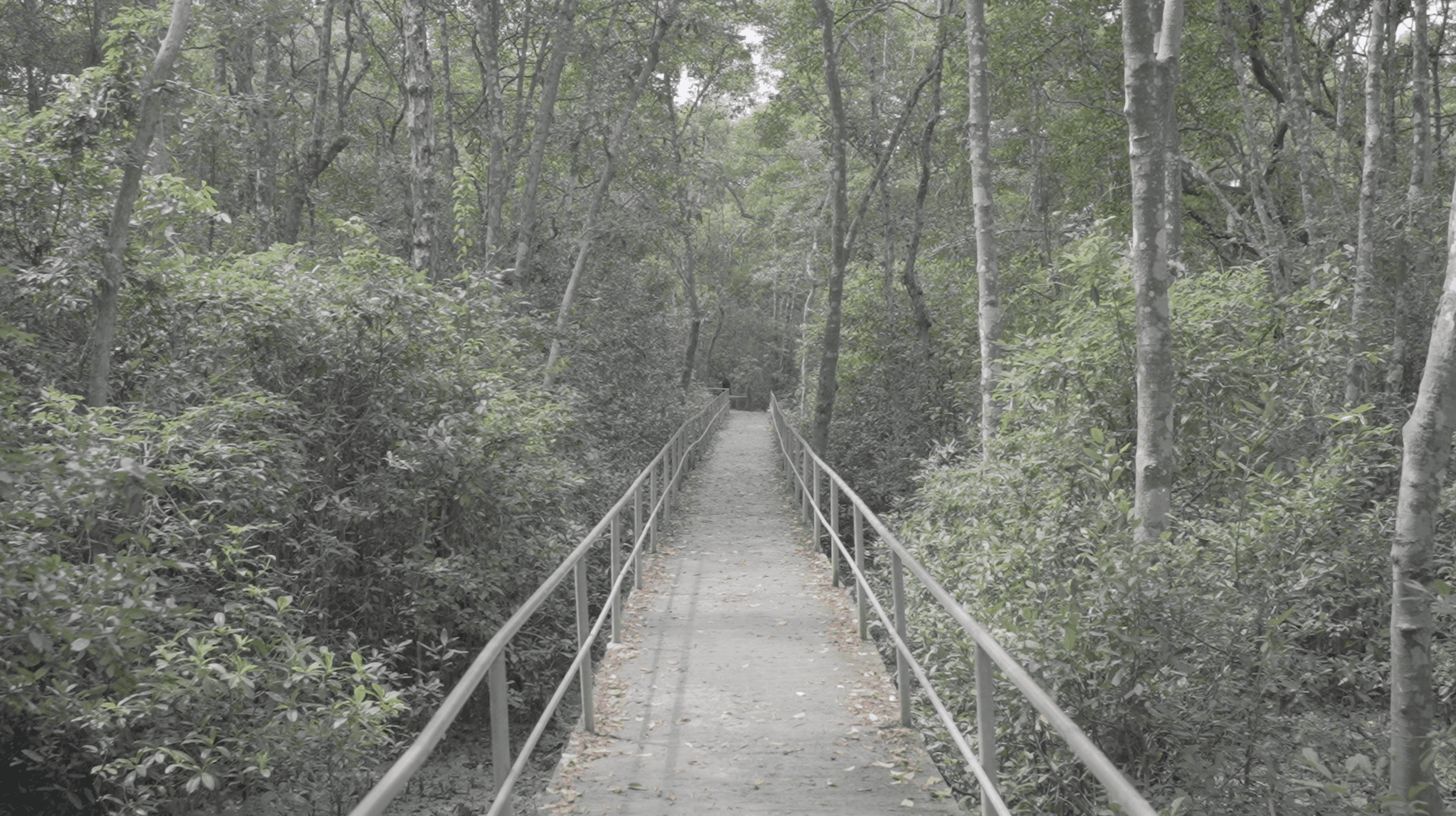
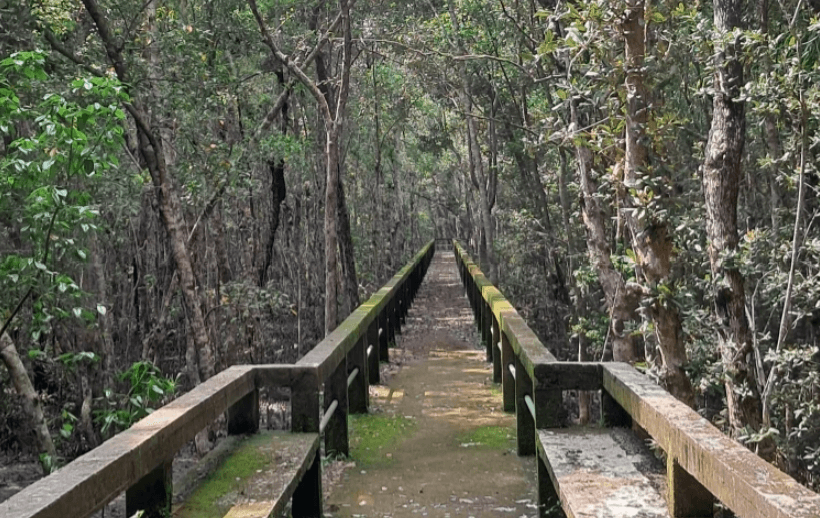
<p>Much of the Sundarbans is experienced from its rivers and canals, but some of its natural character can only be appreciated on foot. Across the forest, government-developed ecotourism centres provide designated walking trails that allow visitors to enter selected areas of the mangrove landscape. Beyond these established facilities, certain authorized forest paths also offer opportunities to explore the wilderness on foot.</p> <p>A Forest Trail Walk takes travelers through these pathways, where the landscape changes with every step. Walk beneath the mangrove canopy, observe the remarkable root systems emerging from the forest floor and discover how different mangrove species adapt to the tidal environment. Along the way, the forest reveals its smaller details: fallen leaves, mudskipper holes, crab activity, animal tracks and the sounds of birds moving through the vegetation.</p> <p>Some trails lead through managed visitor areas with walkways and viewing points, while others offer a more natural experience along forest paths. Depending on the location, travelers may encounter open clearings, dense mangrove vegetation, muddy ground and the changing boundaries between forest and tidal waterways.</p> <p>Accompanied by an experienced guide, travelers can learn about the ecology of the mangroves, identify different plant species and understand how wildlife uses these habitats. The walk also offers a different perspective on the Sundarbans, revealing the forest floor and vegetation that often remain unseen from a boat.</p> <p>Every trail has its own character, shaped by the surrounding habitat, tidal conditions and level of visitor infrastructure. Whether walking along a designated ecotourism trail or exploring an authorized natural pathway, the experience encourages travelers to slow down and observe the forest at close range.</p> <div id="DC8D3EC6_2043_51D8_2C1D_27DFD32768FC"></div> <div id="DC8D3EC6_2043_51D8_2C1D_27DFD32768FC"></div> <div id="DC8D3EC6_2043_51D8_2C1D_27DFD32768FC"></div>
Wildlife Photography
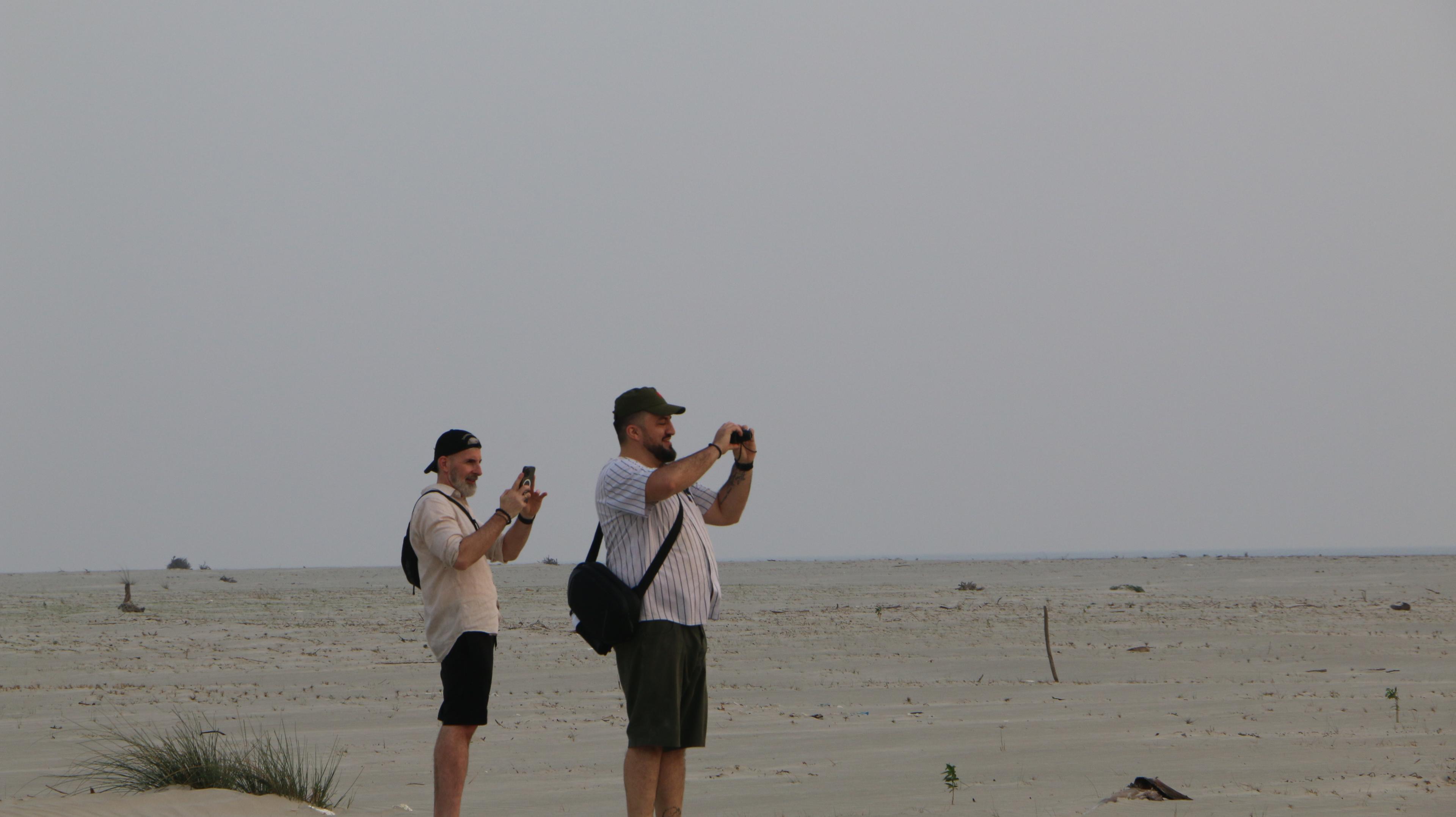
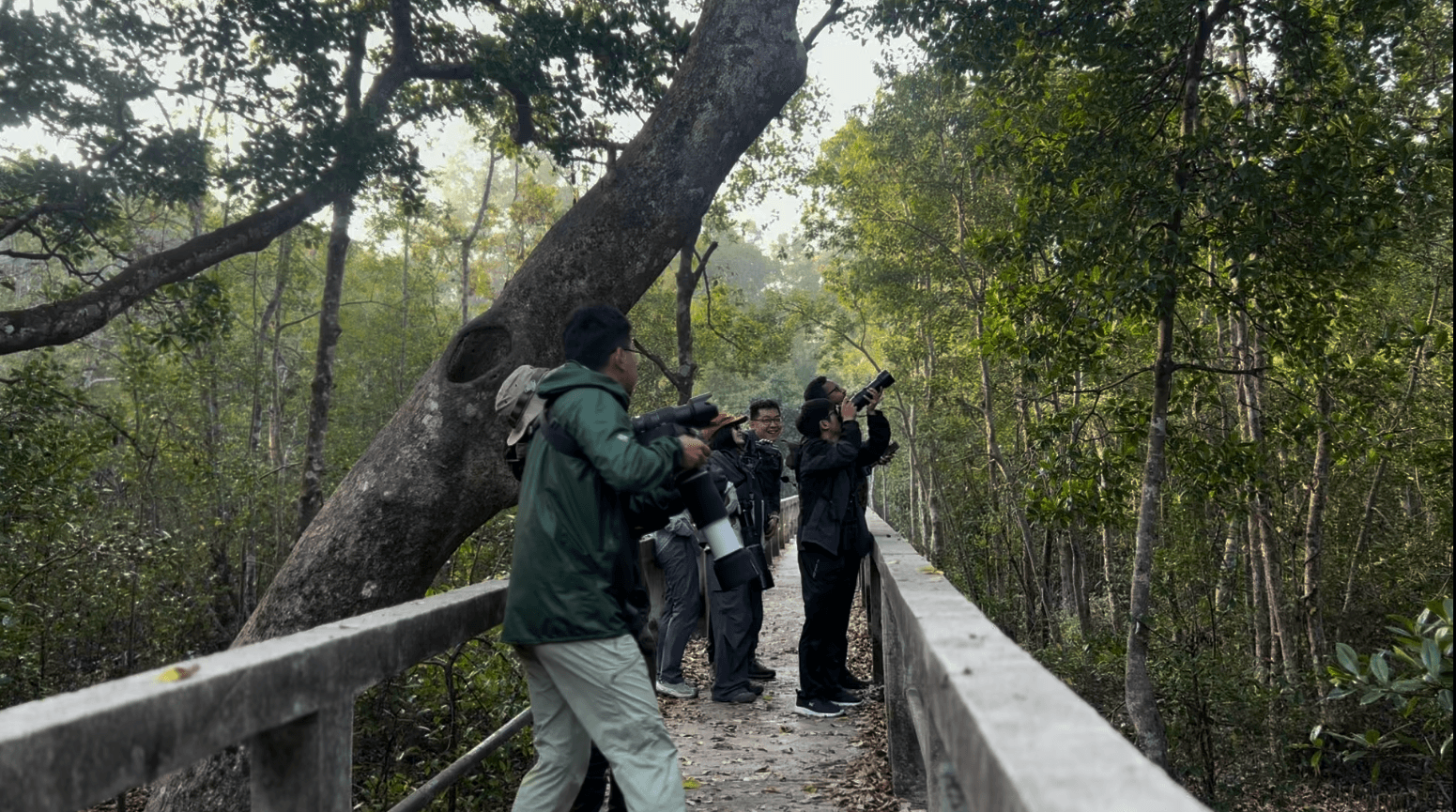
<p style="text-align: justify;">The Sundarbans is a remarkable destination for wildlife photography, where an intricate network of tidal rivers, narrow creeks, mudflats and dense mangrove forests creates habitats for an extraordinary variety of wildlife. From colourful kingfishers perched above quiet waterways to deer moving along the forest edge, every stretch of the mangroves offers the possibility of a memorable encounter.</p> <p style="text-align: justify;">Birdlife is one of the forest’s greatest photographic attractions. The waterways and mangrove canopy provide opportunities to photograph kingfishers, herons, egrets, storks, raptors and migratory shorebirds. The forest is also home to more elusive species, including the Masked Finfoot, making patient exploration of narrow creeks particularly rewarding for bird photographers.</p> <p style="text-align: justify;">Beyond birds, the Sundarbans supports spotted deer, wild boars, rhesus macaques, otters, monitor lizards and estuarine crocodiles. Dolphins may also be encountered in its larger waterways. The Royal Bengal Tiger remains the forest’s most iconic and elusive subject, although sightings are rare and never guaranteed.</p> <p style="text-align: justify;">A wildlife photography expedition moves through different habitats and changing light conditions. From the open deck of the mother vessel, travelers can photograph wildlife along the riverbanks and wider waterways. Traditional country boats allow quieter exploration of selected narrow creeks, while authorized forest trails and designated visitor areas offer opportunities to photograph the mangrove landscape and its inhabitants from land.</p> <p style="text-align: justify;">Early mornings and late afternoons often provide beautiful natural light for photography, while changing tides influence where birds and other wildlife forage. Whether capturing a kingfisher diving for fish, a crocodile resting along a muddy bank, or the intricate details of mangrove life, the experience rewards observation, patience and respect for the natural environment.</p> <p style="text-align: justify;">Wildlife photography in the Sundarbans is not simply about finding a rare animal. It is about learning to notice the smaller moments and relationships that make this mangroves alive.</p> <p style="text-align: justify;"><strong>Bring a camera, follow the waterways and discover the wildlife of the mangroves.</strong></p> <div id="DC8D3EC6_2043_51D8_2C1D_27DFD32768FC"></div>
Mangrove Story Session
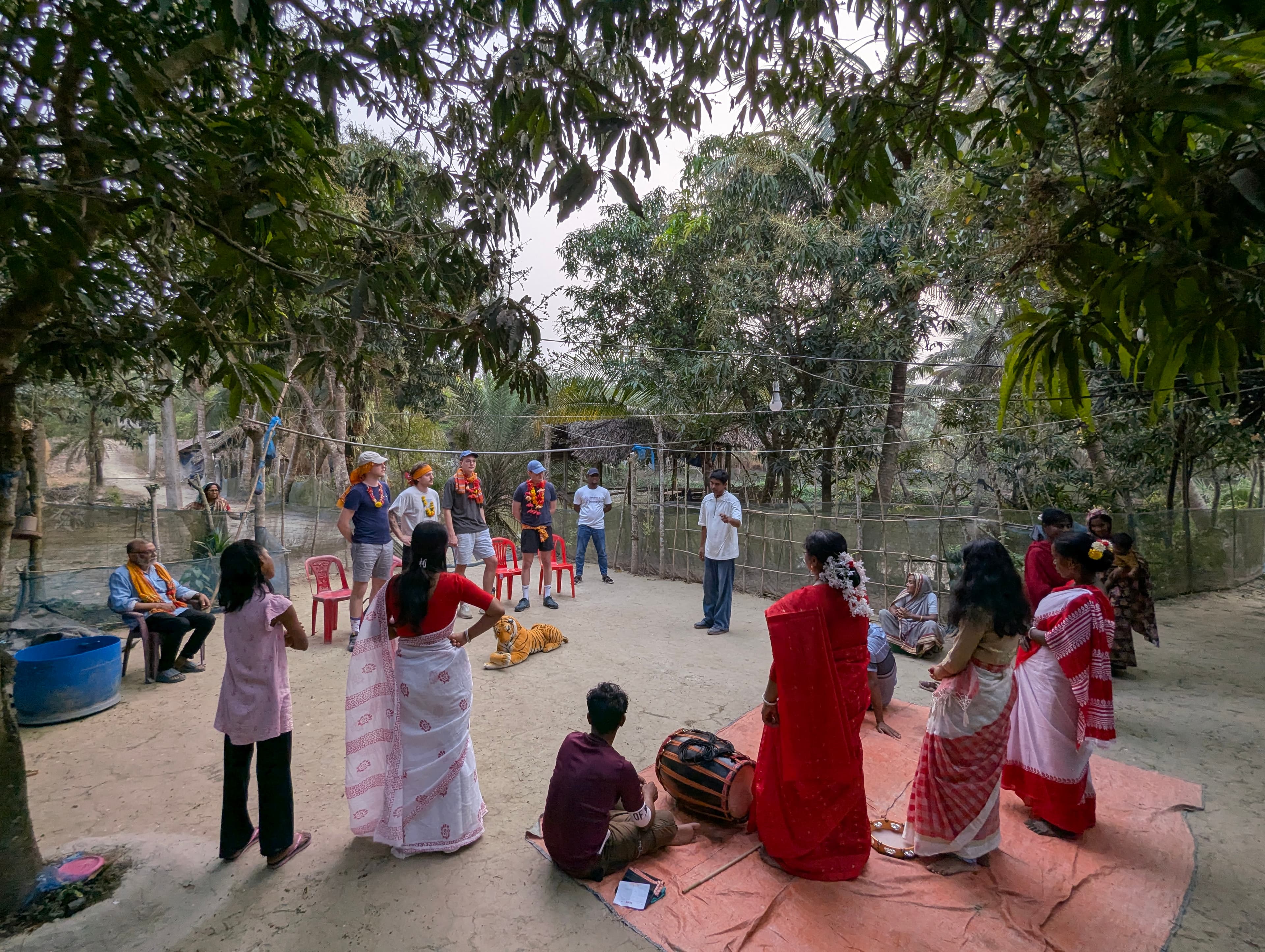
<p dir="ltr" style="text-align: justify;">For generations, the communities of the Sundarbans (honey gatherers, fishers and woodcutters) have ventured into the mangrove maze to sustain their families. Their world is shared with the Royal Bengal tiger, and local life depends on a delicate balance between survival and deep respect for nature. From this raw boundary comes the delta’s most enduring spiritual tradition: the Legend of Bonobibi.</p> <p dir="ltr" style="text-align: justify;">In this four-hour session, the legend is not explained to you. It is performed. Local artists bring it to life as Bonobibi Jatra, a form of traditional open-air folk theatre.</p> <p dir="ltr" style="text-align: justify;"><strong>Background: the legend of Bonobibi</strong></p> <p dir="ltr" style="text-align: justify;">In delta folklore, Bonobibi and her brother Shah Jongoli were sent to the Sundarbans to protect vulnerable forest-goers from Dakkhin Rai, a powerful demonic entity who embodies greed, raw nature and the spirit of the tiger.</p> <p dir="ltr" style="text-align: justify;">The most famous chapter tells of Dukhe, a poor young boy betrayed and abandoned in the deep jungle by an avaricious honey trader named Dhona. Facing certain death at the hands of Dakkhin Rai, Dukhe remembers his mother’s counsel and calls out to Bonobibi, who intervenes to rescue him and restore balance.</p> <p dir="ltr" style="text-align: justify;">Far beyond a miraculous tale, the Bonobibi narrative serves as the moral compass of the delta. It teaches restraint, equity and respect for the natural world.</p> <p dir="ltr" style="text-align: justify;"><strong>At a glance</strong></p> <div style="text-align: justify;"> <div dir="ltr" tabindex="0" role="group" aria-label="Code"> <div> <div> </div> </div> <div> <pre><code> [ THE GUARDIAN OF THE MANGROVE ] Human Necessity Greed & Exploitation (Dukhe / Local Villagers) vs. (Dhona / Human Arrogance) | | +-----------------+------------------+ | [ Dakkhin Rai ] (Tiger Spirit & Raw Wilderness) | [ Divine Intervention ] (Bonobibi & Shah Jongoli Arrive) | * Restores Balance & Protection * * Demands Restraint & Respect *</code></pre> </div> </div> </div> <p dir="ltr" style="text-align: justify;"><strong>The experience</strong></p> <p dir="ltr" style="text-align: justify;">This four-hour immersive session translates living folklore into Bonobibi Jatra. Rather than learning about the delta through static exhibits or guide presentations, travelers experience the legend as a living art form.</p> <p dir="ltr" style="text-align: justify;">Local artists bring the conflict to life through traditional instruments, stylized gestures, elaborate costumes, dramatic dialogue and emotive folk songs. The performance creates a shared cultural space, connecting ancient spiritual beliefs with the daily realities of frontline mangrove life.</p> <p dir="ltr" style="text-align: justify;"><strong>Cultural perspective: why Bonobibi matters</strong></p> <ul dir="ltr" style="text-align: justify;"> <li><strong>Cross-faith harmony.</strong> Bonobibi is uniquely venerated by both Hindu and Muslim forest communities. She transcends religious divides and embodies a shared human need for protection in an unpredictable landscape.</li> <li><strong>Preservation of living heritage.</strong> Supporting local Jatra troupes creates sustainable economic opportunities for traditional folk artists and keeps centuries-old oral storytelling vibrant within the community.</li> <li><strong>Understanding the cultural landscape.</strong> The session reframes the Sundarbans from a mere wildlife sanctuary into a deeply human, spiritual landscape shaped by generations of shared memory.</li> </ul> <p dir="ltr" style="text-align: justify;"><strong>Standard fields</strong></p> <div dir="ltr" style="text-align: justify;"> <table> <thead> <tr> <th scope="col">Field</th> <th scope="col">Value</th> </tr> </thead> <tbody> <tr> <td>Type</td> <td>Culture</td> </tr> <tr> <td>Tide mode</td> <td>Not tide-dependent (to be confirmed per venue)</td> </tr> <tr> <td>Access</td> <td>To be confirmed (venue and how guests reach it)</td> </tr> <tr> <td>Duration</td> <td>4 hours</td> </tr> <tr> <td>Language</td> <td>To be confirmed (performance language and guide translation)</td> </tr> <tr> <td>Site requirement</td> <td>Open-air space for the performance, plus local troupe booked in advance</td> </tr> <tr> <td>Tag</td> <td>To be set by you (Included / Add-On)</td> </tr> <tr> <td>Local partners</td> <td>Local Jatra troupe and artists</td> </tr> <tr> <td>Wildlife</td> <td>Not applicable</td> </tr> </tbody> </table> </div> <hr> <p dir="ltr" style="text-align: justify;">Notes:</p> <ul dir="ltr"> <li style="text-align: justify;"><strong>Nothing cut.</strong> All of your overview, the legend, the diagram, the session description and the three “why it matters” points are in. I only reordered them so the narrative leads and the legend sits in its own block.</li> <li style="text-align: justify;"><strong>Fields to fill.</strong> Access, Language, Tag and tide are marked “to be confirmed”, because I don’t want to guess the venue or the format. Tell me the answers and I’ll complete the table.</li> <li style="text-align: justify;"><strong>Research.</strong> If you share your full research, I can add more depth to the Background and The experience blocks, for example the troupe, the order of the performance, or the instruments. I’d keep any claims you haven’t confirmed marked as such.</li> <li style="text-align: justify;"><strong>Other activities.</strong> I can now rewrite Mud Walk, Boat Safari and Mangrove Archaeological Discovery in this v2 structure so all four match.</li> </ul>
Dingghy Safari
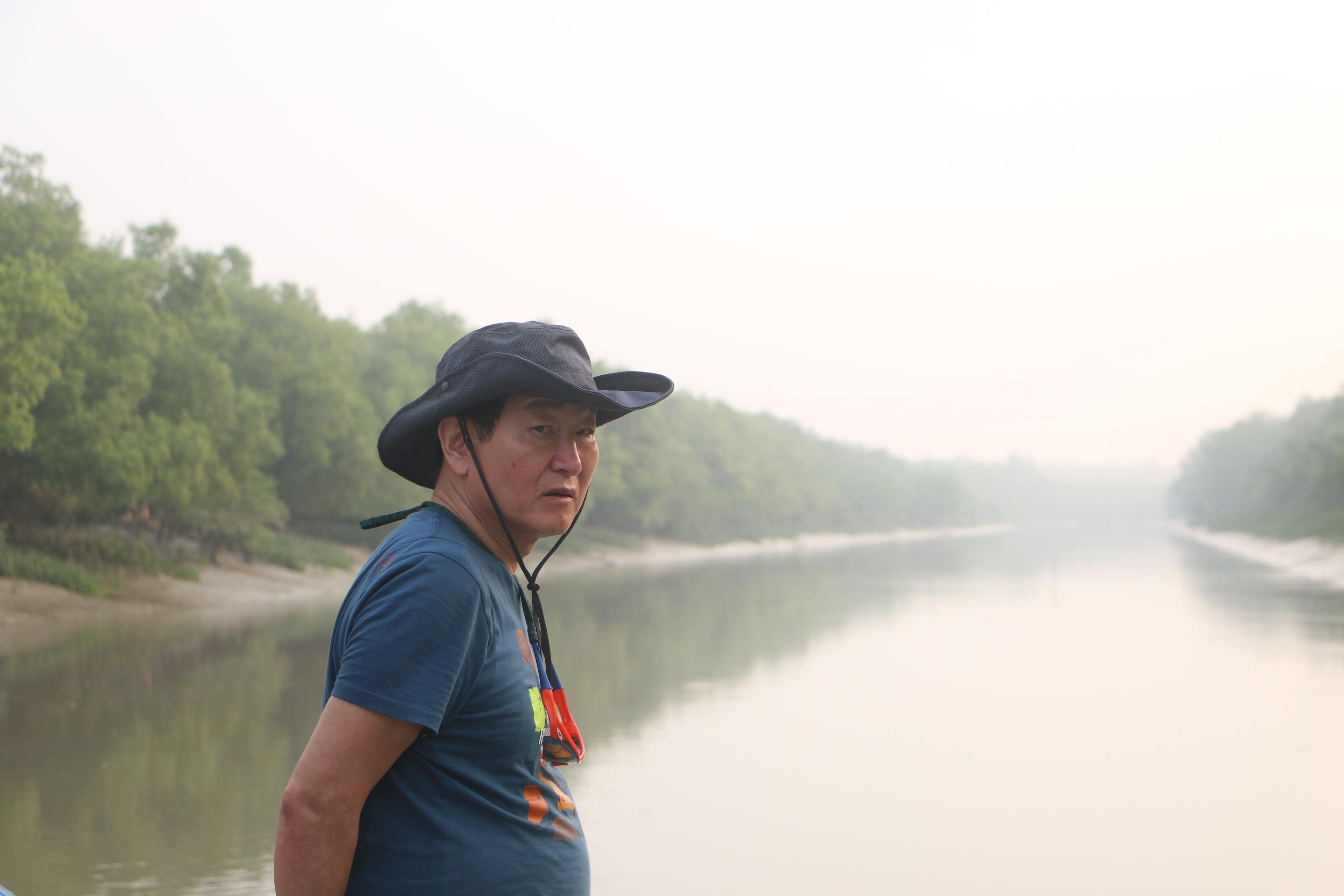
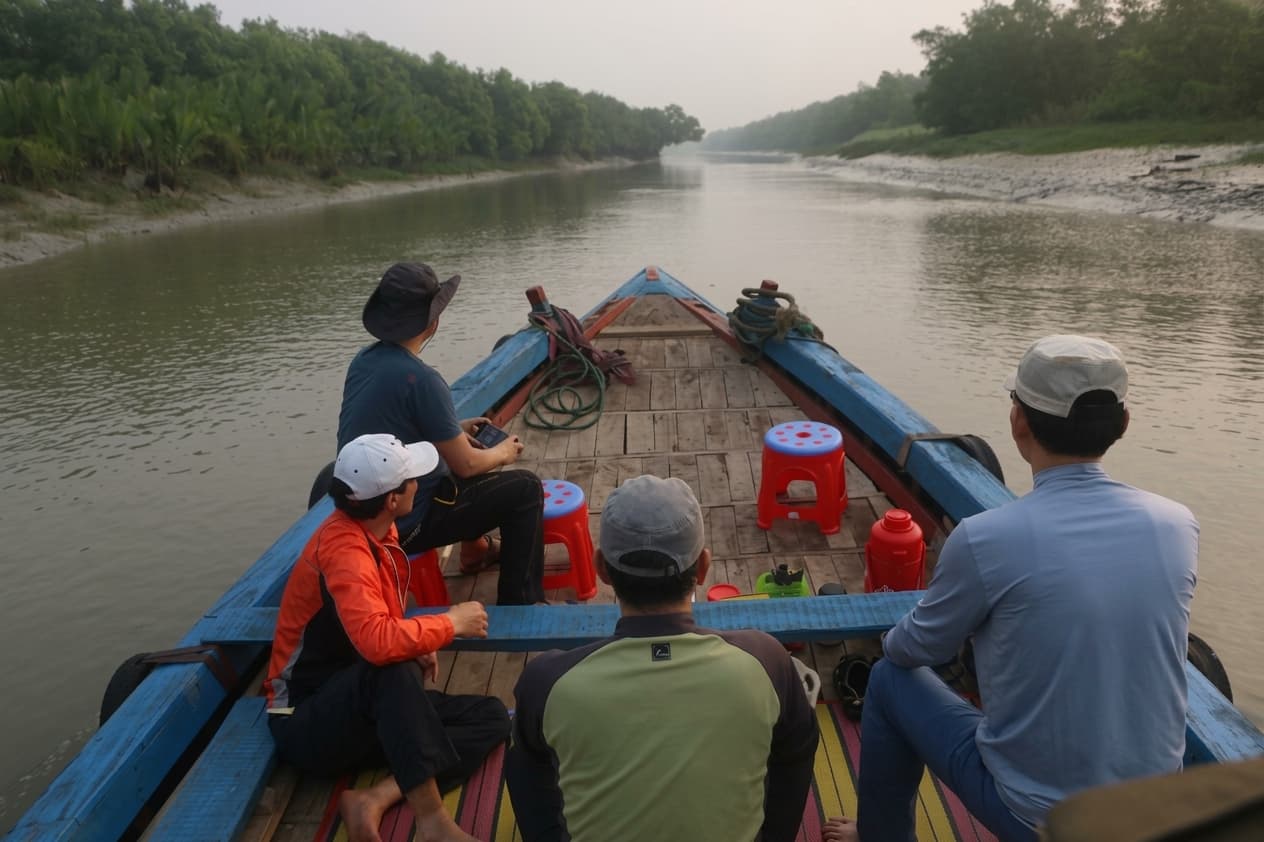
<p>The Sundarbans is woven together by an intricate network of rivers, canals and narrow tidal creeks. While the mother vessel carries the expedition through wider waterways, many of the forest's smaller channels remain beyond its reach. This is where a traditional wooden country boat, locally known as a dinghy, becomes the gateway to a closer exploration of the mangroves.</p> <p>During a Dinghy Safari, travelers board a locally operated wooden boat and venture into narrow canals where the surrounding forest comes within arm's reach. Moving quietly through the waterways, the dinghy offers a different perspective of the mangrove landscape. Its smaller size allows the team to navigate selected creeks, observe the intricate mangrove roots and explore waterways that larger vessels cannot enter.</p> <p>The journey is an opportunity to look for wildlife along the banks and among the vegetation. Kingfishers may appear on low branches, water monitors can sometimes be spotted near the water's edge, and crocodiles may rest along muddy banks. The quieter pace also creates opportunities to notice smaller details of the forest, from tidal marks and crab holes to the movement of fish beneath the water.</p> <p>Accompanied by experienced local boatmen and expedition guides, travelers can learn about the changing waterways, mangrove ecology and the wildlife that inhabits these narrow channels. Every creek has its own character, shaped by the tides, vegetation and natural conditions of the forest.</p> <p>A Dinghy Safari is not simply a transfer from one place to another. It is an opportunity to leave the main waterways behind and experience the Sundarbans at a slower, closer and more intimate pace.</p> <div id="DC8D3EC6_2043_51D8_2C1D_27DFD32768FC" style="text-align: justify;"></div> <div id="DC8D3EC6_2043_51D8_2C1D_27DFD32768FC"></div> <div id="DC8D3EC6_2043_51D8_2C1D_27DFD32768FC"></div>
Creek Safari
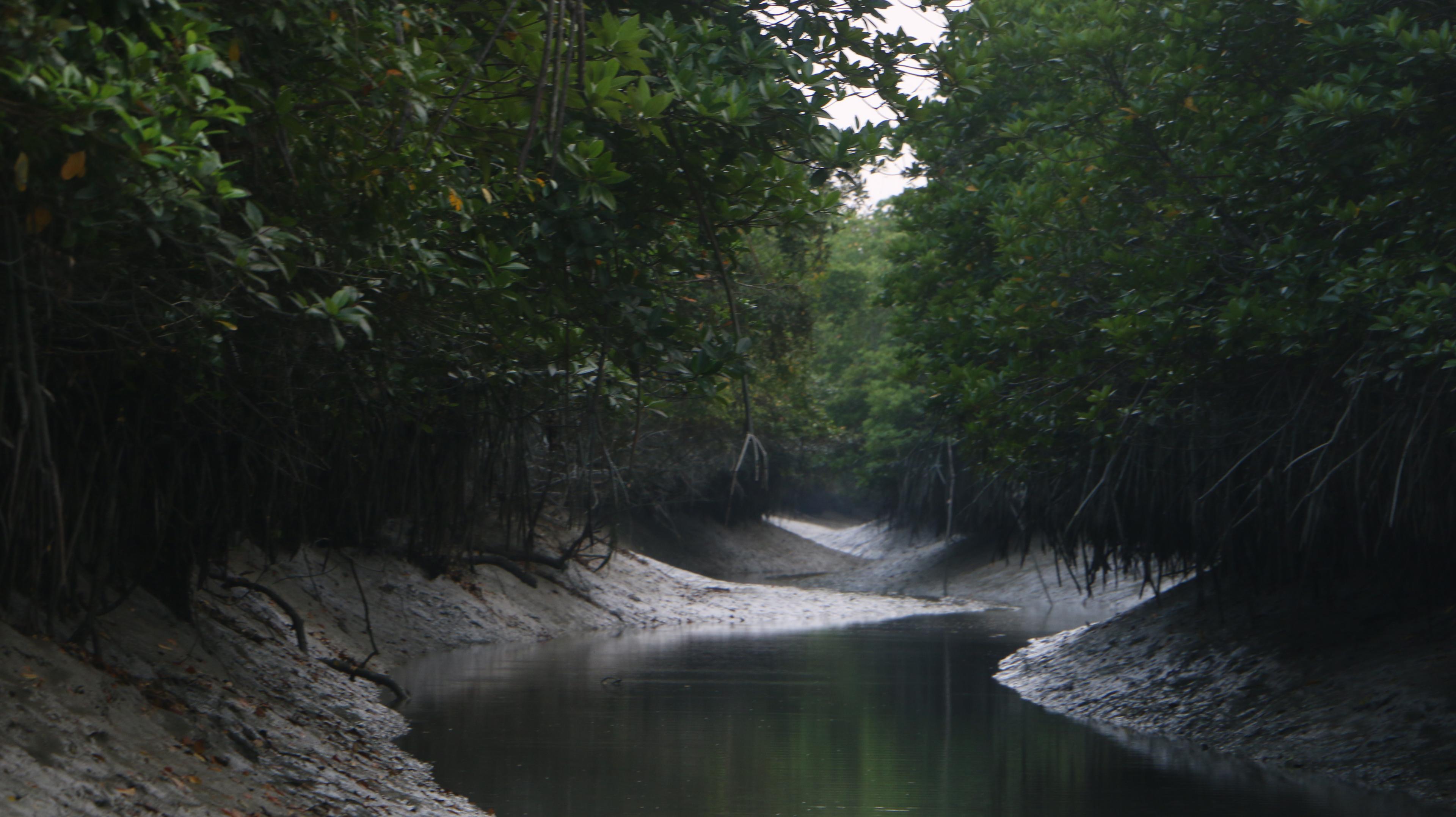
<p dir="ltr" style="text-align: justify;">Boarding a low-impact wooden tender craft, you enter narrow interior tidal channels unreachable by larger vessels. The engine is disengaged, and the skiff drifts silently on the tide beneath a dense mangrove canopy.</p> <p dir="ltr" style="text-align: justify;">In that silence, the forest comes closer. You can observe riverbank wildlife, mudflat dynamics and canopy birds without causing acoustic disturbance, and hear what the forest sounds like when nothing is running.</p> <p dir="ltr" style="text-align: justify;"><strong>The experience</strong></p> <p dir="ltr" style="text-align: justify;">When the waterways become too narrow for the main expedition vessel, the safari continues on this smaller craft into the deeper creeks. Your guide steers you in, cuts the engine, and lets the tide carry you. Move slowly and quietly, and let the forest settle around you.</p> <p dir="ltr" style="text-align: justify;"><strong>Distinction for MAJHI</strong></p> <p dir="ltr" style="text-align: justify;">Boat Safari takes place aboard the main expedition vessel in narrower rivers and forest channels. Dinghy Safari takes over when the waterways become too narrow for that vessel, using a smaller boat to reach the deeper creeks.</p> <p dir="ltr" style="text-align: justify;"><strong>Ecological perspective</strong></p> <ul dir="ltr" style="text-align: justify;"> <li>Interior channels are the quietest part of the forest, so a silent craft shows wildlife that would never appear near an engine.</li> <li>The tide moves the boat and shapes the mudflats, which is why you see the banks change as the water rises or falls.</li> <li>The canopy overhead is a habitat of its own, and birds are most visible and audible from the water in these narrow channels.</li> <li>Mudflat dynamics show how the forest builds and reshapes its edges, tide by tide.</li> <li>A low-impact craft with no engine noise leaves almost no disturbance behind, which is what lets you see natural behavior.</li> </ul> <p dir="ltr" style="text-align: justify;"><strong>Standard fields</strong></p> <div dir="ltr" style="text-align: justify;"> <table> <thead> <tr> <th scope="col">Field</th> <th scope="col">Value</th> </tr> </thead> <tbody> <tr> <td>Type</td> <td>Nature</td> </tr> <tr> <td>Tide mode</td> <td>Drifts with the tide; route planned around water level</td> </tr> <tr> <td>Vessel</td> <td>Low-impact wooden tender craft</td> </tr> <tr> <td>Access</td> <td>By tender from the main expedition vessel, into narrow interior channels</td> </tr> <tr> <td>Duration</td> <td>To be fixed by you</td> </tr> <tr> <td>Language</td> <td>To be confirmed</td> </tr> <tr> <td>Site requirement</td> <td>Channel too narrow for the main vessel but deep enough for the tender at that tide; route confirmed per day</td> </tr> <tr> <td>Tag</td> <td>To be set by you (Included / Add-On)</td> </tr> <tr> <td>Local partners</td> <td>Guide and boat operator</td> </tr> <tr> <td>Wildlife</td> <td>Riverbank wildlife, mudflat life and canopy birds (commonly seen, none guaranteed)</td> </tr> </tbody> </table> </div> <hr> <p dir="ltr" style="text-align: justify;">Notes:</p> <ul dir="ltr"> <li style="text-align: justify;"><strong>Tide mode.</strong> I wrote this as drifting with the tide, since you said so. If some channels can only be entered at a particular tide, tell me and I’ll state it.</li> <li style="text-align: justify;"><strong>Group size.</strong> A tender holds few people. If you have a standard number per boat, I can add it as a field.</li> <li style="text-align: justify;"><strong>Old wording.</strong> Your phrase “without causing acoustic disturbance” stays in the About block. I can also use it as the tagline if you prefer something more technical.</li> </ul> <div id="DC8D3EC6_2043_51D8_2C1D_27DFD32768FC"></div> <div id="D3161620_401C_4C6D_FE33_917ECEE7A56D"></div>
Night Safari
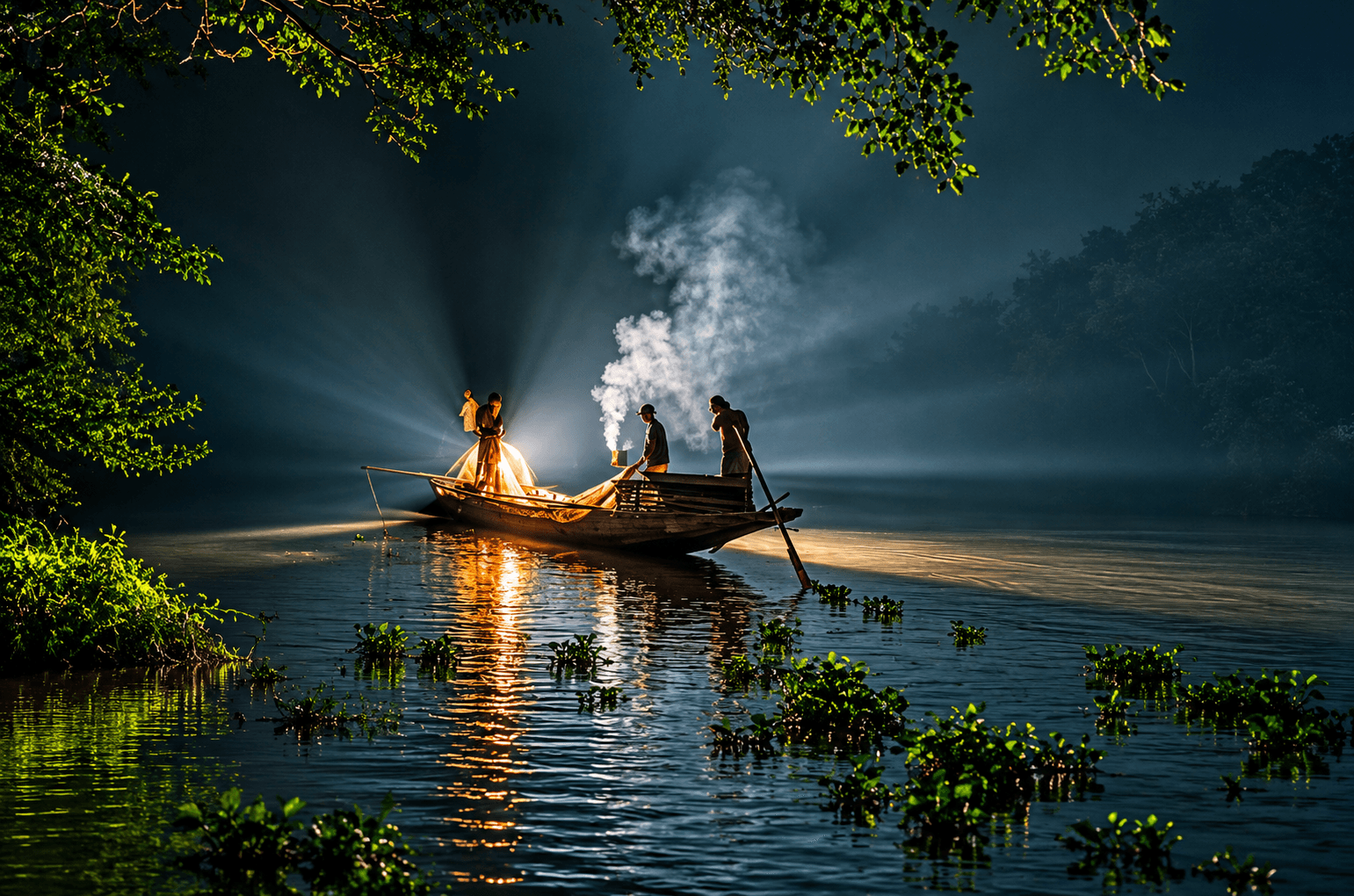
<p style="text-align: justify;">As daylight fades over the Sundarbans, the forest enters a different rhythm. The familiar landscape of tidal rivers and mangrove vegetation gradually disappears into darkness, revealing a world of nocturnal wildlife and sounds that often go unnoticed during the day.</p> <p style="text-align: justify;">A Night Safari takes travelers onto the forest waterways after sunset for a slow and attentive exploration of the mangrove wilderness. Aboard a suitable expedition boat, travelers navigate selected rivers and channels, looking along the riverbanks and forest edges for signs of wildlife. With carefully directed lighting, the expedition team may help identify nocturnal animals, including crocodiles, owls, fishing cats and other wildlife that become active after dark.</p> <p style="text-align: justify;">The experience is as much about listening as looking. The calls of nocturnal birds, movement in the surrounding vegetation, the occasional splash in the water and the reflections of the forest under the night sky create an atmosphere very different from a daytime safari.</p> <p style="text-align: justify;">Wildlife encounters are never guaranteed, and the experience depends on weather, tidal conditions, permitted routes and animal activity. The objective is to explore the forest respectfully without disturbing its nocturnal inhabitants.</p> <p style="text-align: justify;"><strong>Experience highlight:</strong> Discover the mysterious nighttime world of the Sundarbans through a quiet journey along its dark tidal waterways.</p> <div style="text-align: justify;"> </div> <h3 style="text-align: justify;"><strong>MAJHI activity portfolio classification</strong></h3> <div style="text-align: justify;"> <div> <table> <tbody> <tr> <th> <p>Attribute</p> </th> <th> <p>Description</p> </th> </tr> <tr> <td> <p><strong>Activity name</strong></p> </td> <td> <p>Night Safari</p> </td> </tr> <tr> <td> <p><strong>Category</strong></p> </td> <td> <p>Wildlife Exploration</p> </td> </tr> <tr> <td> <p><strong>Environment</strong></p> </td> <td> <p>Tidal rivers, channels and mangrove edges</p> </td> </tr> <tr> <td> <p><strong>Transport</strong></p> </td> <td> <p>Suitable expedition boat</p> </td> </tr> <tr> <td> <p><strong>Experience type</strong></p> </td> <td> <p>Nocturnal wildlife exploration</p> </td> </tr> <tr> <td> <p><strong>Best time</strong></p> </td> <td> <p>After sunset</p> </td> </tr> <tr> <td> <p><strong>Duration</strong></p> </td> <td> <p>Depends on the expedition itinerary</p> </td> </tr> </tbody> </table> </div> </div> <p style="text-align: justify;"> </p> <div id="D3161620_401C_4C6D_FE33_917ECEE7A56D" style="text-align: justify;"></div>
Guided Mangrove Walk
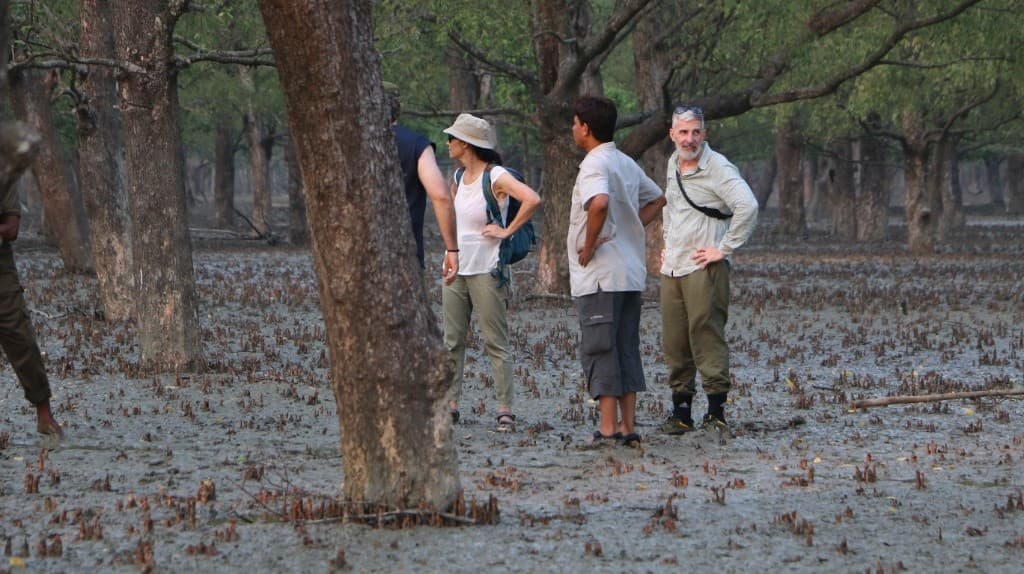
<p style="text-align: justify;">As you move beneath the forest canopy, your guide helps you notice the details that are easy to overlook; from the diversity of mangrove vegetation and distinctive root structures to the relationship between the forest floor, tidal waterways and surrounding ecosystem. The walk encourages observation and curiosity, transforming a simple trail visit into an opportunity to understand how the mangrove landscape lives and changes.</p> <p style="text-align: justify;">Every guided walk has its own character. The experience is shaped by the guide's field experience, ecological knowledge, storytelling ability and individual interests. Some guides may focus on vegetation and forest ecology, while others may bring particular strengths in local knowledge, wildlife observation or the wider relationship between people and the Sundarbans.</p> <p style="text-align: justify;">A small, curated selection of guides is available through our talent list. Travelers can explore the available profiles and choose a guide whose expertise and approach align with their interests.</p> <p style="text-align: justify;">Whether you are a nature enthusiast, a curious first-time visitor or a traveler seeking a deeper connection with the Sundarbans, a guided mangrove walk offers an opportunity to slow down, observe carefully and discover more than the trail reveals at first glance.</p>
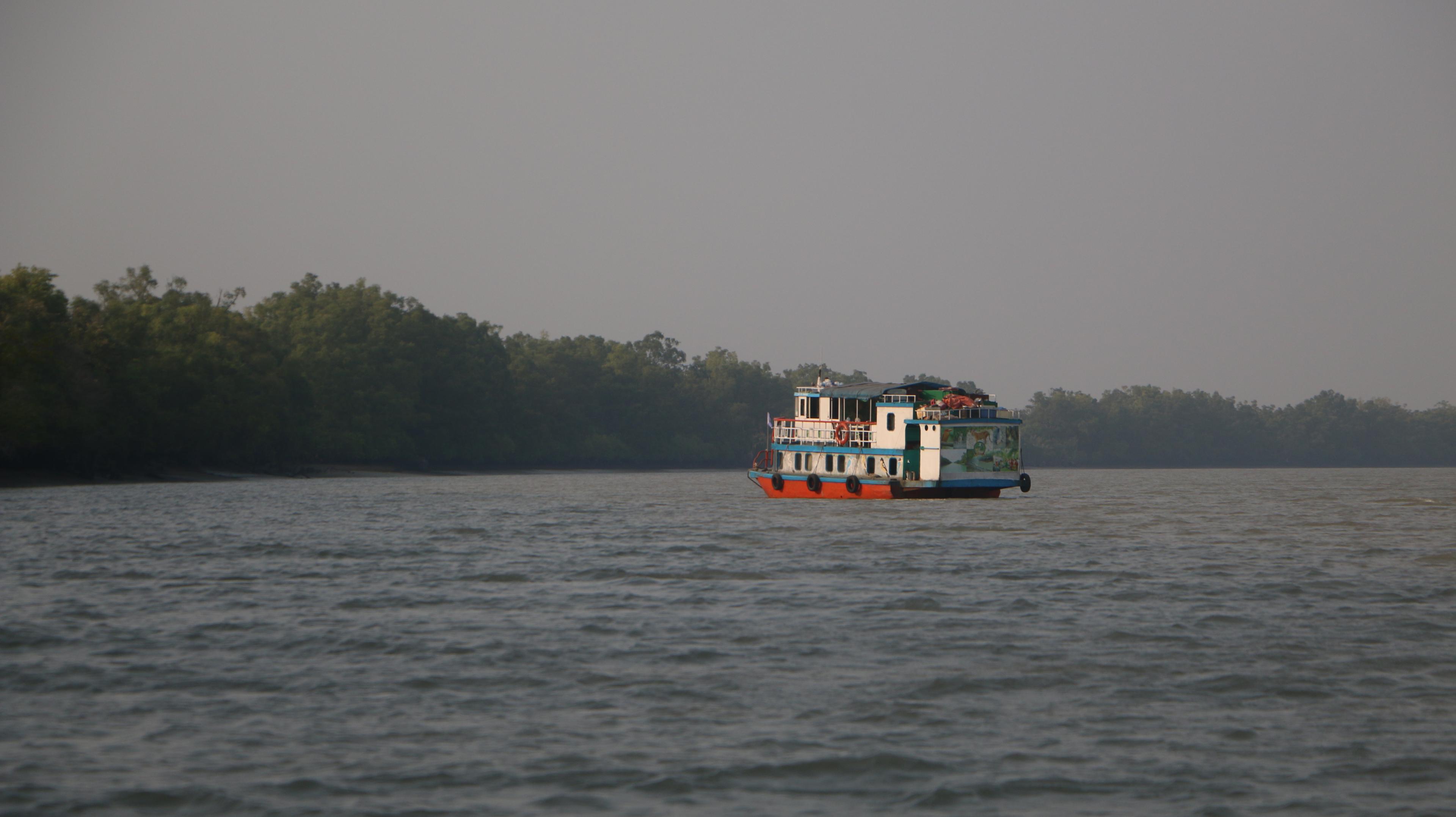
Mangrove Anchorage
<p style="text-align: justify;">An expedition through the Sundarbans is as much about knowing where to stop as it is about knowing where to sail. Mangrove Anchorage offers travelers the opportunity to pause their journey at selected locations within the forest and spend time exploring the surrounding landscape beyond the main waterways.</p> <p style="text-align: justify;">When the mother vessel anchors at a suitable location, the surrounding mangrove environment becomes an open ground for exploration. Travelers can venture into nearby narrow creeks aboard a traditional wooden dinghy, discover smaller waterways inaccessible to the larger vessel, or explore suitable forest trails and designated walking routes on foot. Depending on the location, they may also spend time observing wildlife, photographing the landscape, birdwatching or simply experiencing the stillness of the forest.</p> <p style="text-align: justify;">The choice of anchorage can shape the character of the experience. A quiet riverbank, a secluded creek entrance or a location close to a forest trail can each offer a different perspective of the Sundarbans. Rather than following a fixed schedule, anchoring allows the expedition team to dedicate time to a particular landscape and explore its surroundings more closely.</p> <p style="text-align: justify;">Whether the vessel anchors during the day for an extended forest exploration or remains at a chosen location after sunset, the experience is defined by the freedom to pause, observe and discover. It transforms the mother vessel from simply a means of transportation into a base for exploring the mangrove wilderness.</p> <p style="text-align: justify;"><strong>Experience highlight:</strong> Choose a place within the mangrove wilderness, anchor your expedition vessel and explore the surrounding forest by traditional dinghy or on foot.</p> <div style="text-align: justify;"> </div> <h3 style="text-align: justify;"><strong>MAJHI activity portfolio classification</strong></h3> <div style="text-align: justify;"> <div> <table> <tbody> <tr> <th> <p>Attribute</p> </th> <th> <p>Description</p> </th> </tr> <tr> <td> <p><strong>Activity name</strong></p> </td> <td> <p>Mangrove Anchorage</p> </td> </tr> <tr> <td> <p><strong>Category</strong></p> </td> <td> <p>Nature Exploration</p> </td> </tr> <tr> <td> <p><strong>Environment</strong></p> </td> <td> <p>Selected mangrove waterways and forest locations</p> </td> </tr> <tr> <td> <p><strong>Primary vessel</strong></p> </td> <td> <p>Mother Vessel</p> </td> </tr> <tr> <td> <p><strong>Exploration methods</strong></p> </td> <td> <p>Traditional dinghy, forest trail walks and wildlife observation</p> </td> </tr> <tr> <td> <p><strong>Experience type</strong></p> </td> <td> <p>Location-based forest exploration</p> </td> </tr> <tr> <td> <p><strong>Timing</strong></p> </td> <td> <p>Daytime or nighttime, depending on the itinerary</p> </td> </tr> </tbody> </table> </div> </div> <p style="text-align: justify;"> </p>
About Shekhertek Eco-Tourism Center
Deep in the Sundarbans West Forest Division, where the Shibsa river meets a quiet tidal canal, the forest holds something unexpected: the ruins of a temple, the footings of houses and a field of old bricks. Locals call the canal the Shekher Khal, the canal of Shekh.
Where You Are
- Forest block: Khulna Range, Sundarbans West Forest Division, close to the Adachai Patrol Post (about 5 km from the Shekher Bari)
- Rivers: the Shekher Khal runs off the Shibsa; the Kalir Khal, a second canal, carries you toward the temple
- Shekher Bari: 22°13.662′N, 89°28.790′E, on the east bank of the Shibsa
- Kalir Khal Mandir: 22°13.253′N, 89°29.922′E
- Between the two: roughly 2 km within the site
- Study area: about 54.7 km² of river, forest and ruins, of which the two ruin units cover just over 1.2 km²
- Ground: low, clay soil, shallow topsoil, dry for only about five months of the year; no fresh surface water
The Forest Around You
The ruins sit inside dense mixed mangrove, dominated by Sundri (Heritiera fomes). Roughly 54% of the surrounding forest is low-storied and 46% high-storied, which gives you a changing canopy as the boat moves from canal to river.
Watch for:
- Pasur, Bain, Gewa, Goran and Golpata along the banks and inner forest, with rarer orchids and climbers tucked into the shade
- Hental palm (Phoenix paludosa), which fences both banks of the Shekher Khal from the Shibsa up to the temple side and gives the canal its tunnel-like beauty
- Gaab, Bot (fig) and Bhui kumari, which are not typical mangrove species, plants that earlier inhabitants brought: Gaab fruit possibly used to seal boats and also good to eat, Bhui kumari edible, and the fig likely planted for worship.
In other words, some of the trees here are part of the human story.
Walking Through the Story
The route below follows how the site is laid out, not a fixed itinerary. Tide, light and the guards' judgement decide the order.
Stop 1: The Shibsa Bank and the Shekher Bari
The visit begins at the river. On the east bank of the Shibsa, the remains of the Shekher Bari, the house of Shekh, lie on the forest floor, visible from the water. According to local accounts, the Shekh community, who were Muslim, lived here, set apart along the river bank. This is the first reminder that people once lived at the edge of this forest, not only passed through it.
Stop 2: The Shekher Khal Dinghy Safari
Transfer to a small boat and enter the canal. Hental palms close in on both sides. Go quietly. This is the best stretch for birds and for the sudden stillness that tells you something large may be near the bank. Because the canal is narrow, a dinghy is the practical way in.
Stop 3: Adventure Walk to Kalir Khal Mandir and the Zamindar Bari
The temple stands on the bank of the Kalir Khal, about a kilometre inland from the Shekher Khal canal bank. Its arched entrance, thin hand-made bricks and carved stonework are still readable. Beside it are the ruins of a building identified locally as the Zamindar Bari, the landlord's house, and local accounts say the temple was built by that landlord. Hindu families are said to have lived around it.
Local say "Shekher Mandir", yet the temple is the Kalir Mandir. The name of the canal has quietly taken over the name of the temple.
Stop 4: Iter Paja, the Old Brick Field
On the opposite, west bank of the Shibsa near the Khutir Khal, fishermen came across the remains of a brick field, known locally as Iter Paja. The belief is that the small thin bricks, joined with lime and brick powder, were fired here for the buildings you have just seen. Further along are traces associated with the Bede, the boat-dwelling community, near the Beder Khal.
The honest answer to "how old is this?" is: nobody has confirmed it.
- The structures are assumed to be about 400 years old, in the time when Hazrat Khan Jahan Ali was clearing forest toward Jessore, Khulna and Bagerhat. They may be older.
- Local stories offer other origins: people displaced by a natural disaster in the Java or Sumatra region, with the Kapali people of Jorsing, Koyra, said to be their descendants; or the forest-dwelling pirates said to have been ransomed some 600 years ago.
- There is no accurate record of when people arrived, how long they stayed, or where they came from.
Tell it as an open question. That is the most truthful version, and the most interesting.
Wildlife
Local fishermans found tiger pugmarks around the temple and describe the Royal Bengal tiger as very frequently visible at the site, known as Bagher Bari. Treat that as a reason for care, not a promise of a sighting.
- Mammals: spotted deer, wild boar, monkeys, monitor lizards, snakes, otters
- Birds: lesser adjutant, grey-headed fish eagle, open-billed stork, pheasant-tailed jacana, Brahminy kite, grey heron, great egret, cormorant, common kingfisher, brown-winged kingfisher, coot, masked finfoot, owls, jungle fowl
- Water: about 13.35 km² of canals, creeks and river rich in fish and other aquatic life
The masked finfoot and the lesser adjutant are the two for a birder to hunt.
Tide, Season and Timing
- Visitor numbers in this division rise from October to April or May, when the rivers are calm. That is also the sensible window for an expedition.
- November brings the Rash Purnima Mela, a Hindu worship festival, and heavier boat traffic through the western division.
- The length of a visit follows the high and low tide. Plan the dinghy entry and the walk around the water, not the clock.
- The authors propose no overnight stay at the site unless a well-managed safari camp exists.
Practical Notes for the Field
These reflect the site as described by the authors. Conditions may have changed since, so confirm on the ground.
- No trail. At the time of the study there was no footpath or marker to either the Shekher Bari or the temple, and no landing or boat-stopping point at either. Expect uneven, root-covered, muddy ground.
- Guards and guide. The authors propose that every visit is led by an eco-guide with forest guards. Do not leave the group.
- Permits. Their proposal has visitors collect permits at the Nalian Forest Range Headquarters, about 26 km from the Shekher Bari.
- Drinking water. There is no fresh surface water and groundwater is poor. Carry all you need.
- Weather risk. The area is exposed to cyclones, storm surges and tidal waves.
- Distance. The site lies about 15 km from the nearest forest edge, a long journey through the forest.
Travelling Lightly
The ruins are crumbling, and the authors note that they are being damaged right now. Visitors can help or harm.
- Do not climb on walls, remove bricks or carve surfaces.
- Keep voices low and group size small; the site is a wildlife corridor first.
- Leave nothing, including food scraps.
- Treat guards, guides and boat crews from nearby villages as the real hosts. The paper's whole argument is that visits like this can offer forest-dependent families an income that is not taken from the forest.
Why It Matters
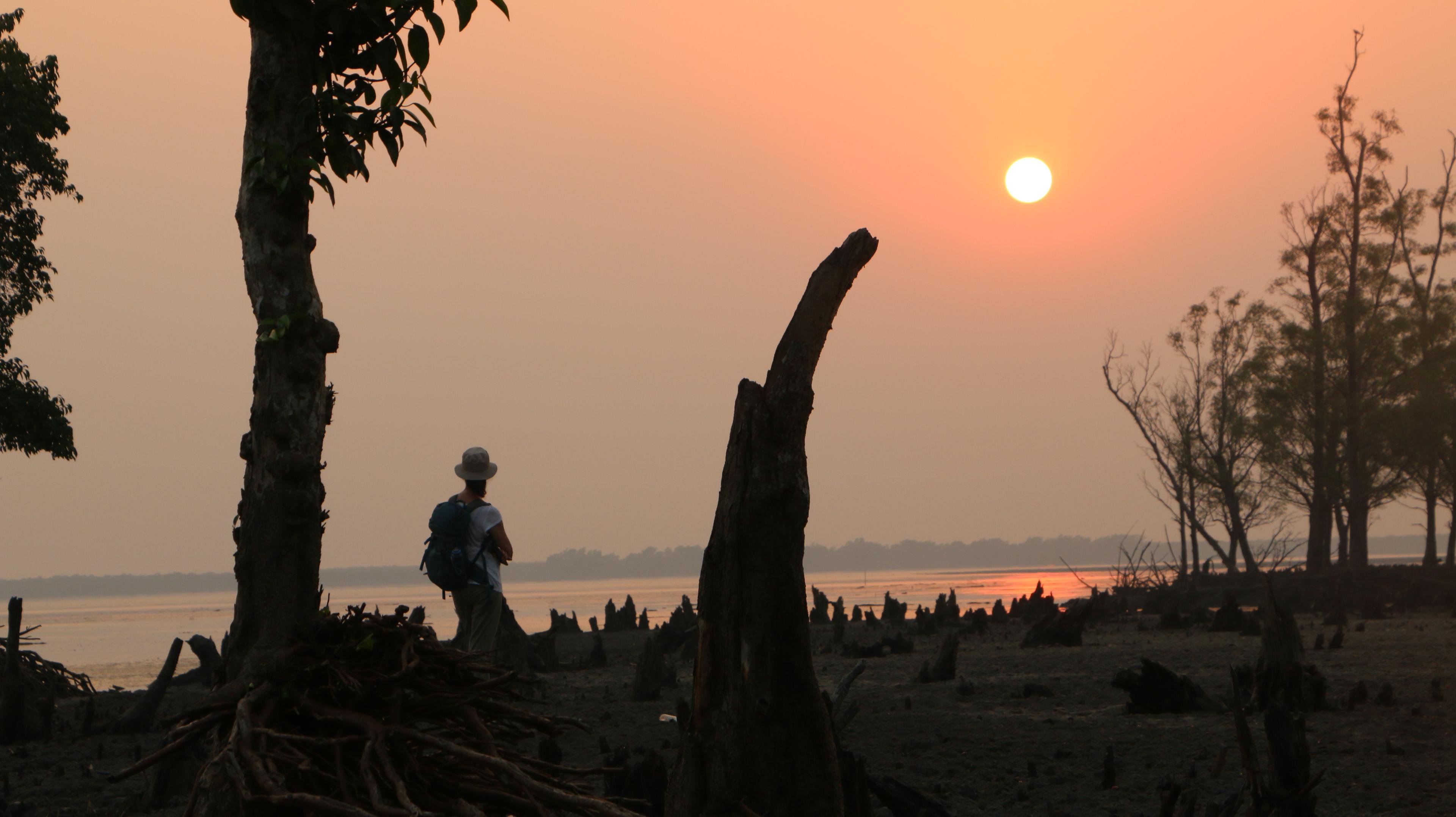
Shekhertek is a rare place where the human history of the Sundarbans can be seen with your own eyes: where people lived, worshipped, made bricks and left. Today the forest is a protected reserve and nobody lives here. Visiting well helps the case for protecting both the ruins and the forest that has reclaimed them.