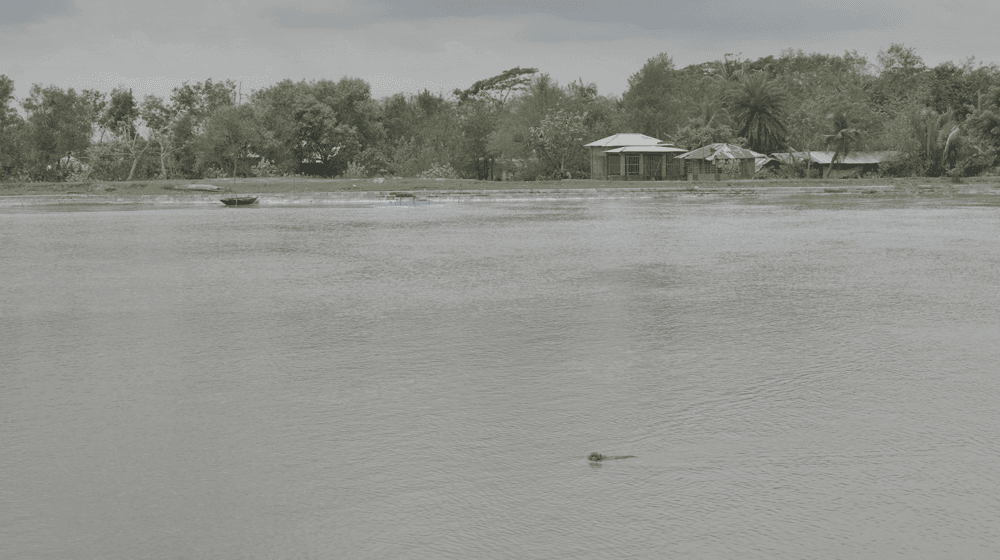
Dhangmari Khal
ধাংমারী খালDhangmari Khal separates the Sundarbans from Purbo and Paschim Dhangmari villages, offering a unique opportunity to explore tidal waterways, observe dolphins and experience the traditional livelihoods, folklore and community life of the forest frontier.
Experiences at this Stop
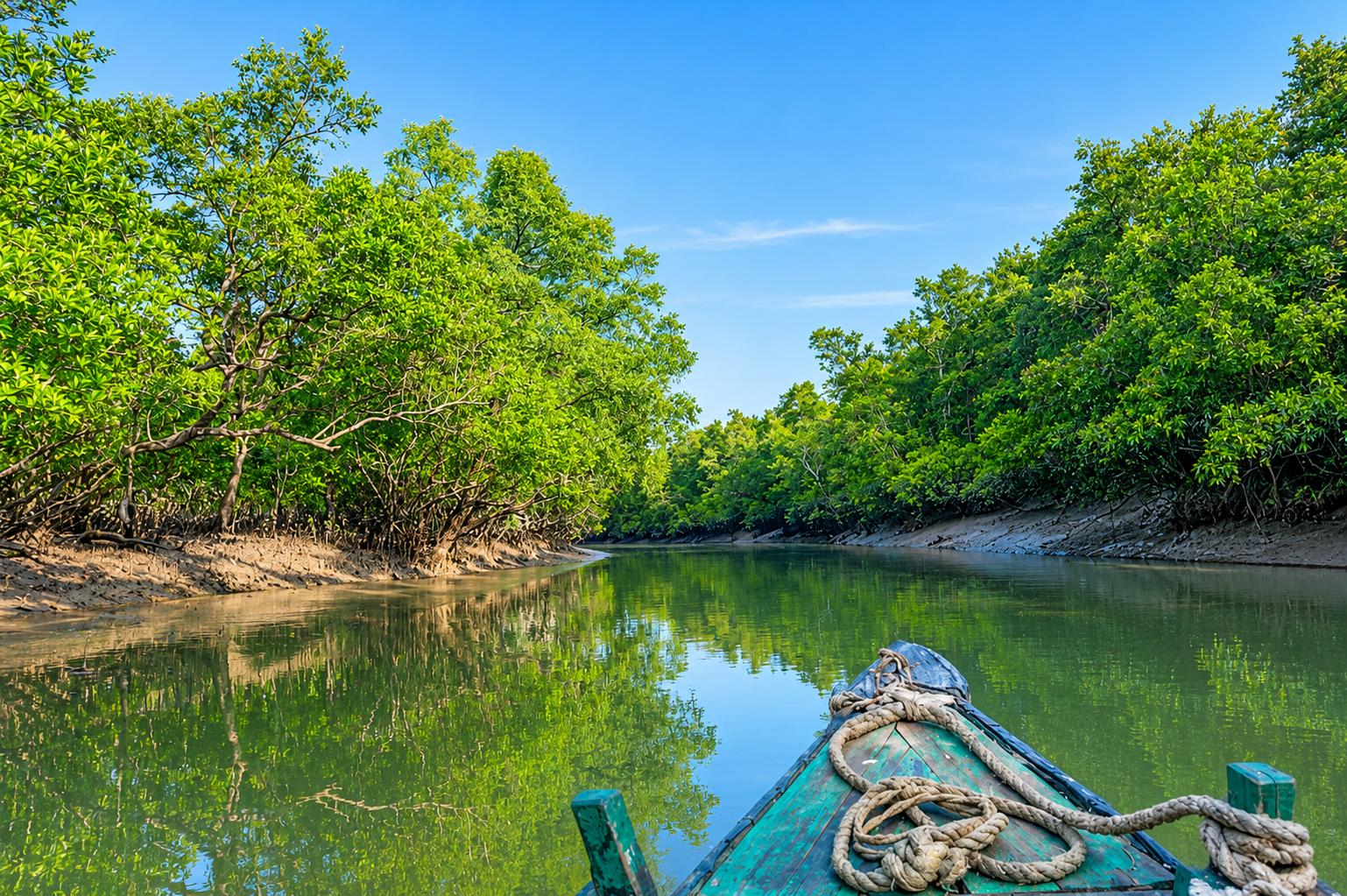
Meditation Session
<p style="text-align: justify;">Amid the vast mangrove landscape of the Sundarbans, where tidal rivers flow through intricate networks of creeks and the forest moves to the rhythm of nature, a meditation session offers travelers an opportunity to slow down and experience the wilderness in a different way.</p> <p style="text-align: justify;">Away from the usual activities of an expedition, travelers can take a quiet moment to practise mindfulness in a peaceful natural setting. Depending on the surroundings and expedition arrangements, the session may take place on the upper deck of the mother vessel, beside a secluded creek or at a suitable forest-side location.</p> <p style="text-align: justify;">With the gentle movement of the water, the sounds of birds and the rustling of mangrove leaves as a natural backdrop, travelers are invited to focus on their breathing, observe their surroundings and enjoy a moment of calm. The experience does not require previous meditation practice; it is simply an opportunity to pause, be present and appreciate the natural environment.</p> <p style="text-align: justify;">In a destination often explored through wildlife encounters, river journeys and forest walks, Mangrove Meditation creates space for a more personal connection with the Sundarbans.</p> <p style="text-align: justify;"><strong>Experience highlight:</strong> Embrace a moment of mindfulness surrounded by the sights and natural sounds of the mangrove wilderness.</p> <div style="text-align: justify;"> </div> <h3 style="text-align: justify;"><strong>MAJHI activity portfolio classification</strong></h3> <div style="text-align: justify;"> <div> <table> <tbody> <tr> <th> <p>Attribute</p> </th> <th> <p>Description</p> </th> </tr> <tr> <td> <p><strong>Activity name</strong></p> </td> <td> <p>Mangrove Meditation Session</p> </td> </tr> <tr> <td> <p><strong>Category</strong></p> </td> <td> <p>Wellness & Mindfulness</p> </td> </tr> <tr> <td> <p><strong>Environment</strong></p> </td> <td> <p>Mother vessel, quiet creek or suitable forest-side setting</p> </td> </tr> <tr> <td> <p><strong>Experience type</strong></p> </td> <td> <p>Guided or self-led mindfulness</p> </td> </tr> <tr> <td> <p><strong>Duration</strong></p> </td> <td> <p>15–30 minutes (suggested)</p> </td> </tr> </tbody> </table> </div> </div> <p style="text-align: justify;"> </p> <div id="D3161620_401C_4C6D_FE33_917ECEE7A56D" style="text-align: justify;"></div>

Yoga Session
<p style="text-align: justify;">The quiet hours of the morning offer a special way to experience the Sundarbans. As the first light spreads across the tidal waterways and the mangrove forest gradually awakens, a yoga session provides travelers with an opportunity to reconnect with themselves and their natural surroundings.</p> <p style="text-align: justify;">Set against the landscape of the mangroves, travelers can practise gentle yoga movements, stretching and breathing exercises in a peaceful outdoor setting. Depending on the expedition's location and arrangements, the session can take place on the open deck of the mother vessel or at a suitable, quiet spot along the river.</p> <p style="text-align: justify;">With the soft morning breeze, the sounds of birds and the gentle movement of the river, the natural surroundings become an integral part of the experience. Whether travelers are experienced yoga practitioners or simply looking to begin their morning with mindful movement, the session offers a welcoming opportunity to slow down and enjoy the moment.</p> <p style="text-align: justify;">Away from busy schedules and familiar surroundings, practising yoga in the Sundarbans brings a different dimension to the expedition — combining physical movement, mindfulness and the restorative atmosphere of the mangrove wilderness.</p> <p style="text-align: justify;"><strong>Experience highlight:</strong> Welcome the morning with yoga and mindful movement, surrounded by the awakening mangrove forest.</p> <div style="text-align: justify;"> </div> <h3 style="text-align: justify;"><strong>MAJHI activity portfolio classification</strong></h3> <div style="text-align: justify;"> <div> <table> <tbody> <tr> <th> <p>Attribute</p> </th> <th> <p>Description</p> </th> </tr> <tr> <td> <p><strong>Activity name</strong></p> </td> <td> <p>Yoga in the Mangroves</p> </td> </tr> <tr> <td> <p><strong>Category</strong></p> </td> <td> <p>Wellness & Mindfulness</p> </td> </tr> <tr> <td> <p><strong>Environment</strong></p> </td> <td> <p>Mother vessel's open deck or suitable riverside setting</p> </td> </tr> <tr> <td> <p><strong>Experience type</strong></p> </td> <td> <p>Outdoor yoga and mindful movement</p> </td> </tr> <tr> <td> <p><strong>Best time</strong></p> </td> <td> <p>Early morning</p> </td> </tr> <tr> <td> <p><strong>Duration</strong></p> </td> <td> <p>30–45 minutes (suggested)</p> </td> </tr> </tbody> </table> </div> </div> <p style="text-align: justify;"> </p> <div id="DC8D3EC6_2043_51D8_2C1D_27DFD32768FC" style="text-align: justify;"></div> <div id="D3161620_401C_4C6D_FE33_917ECEE7A56D" style="text-align: justify;"></div>
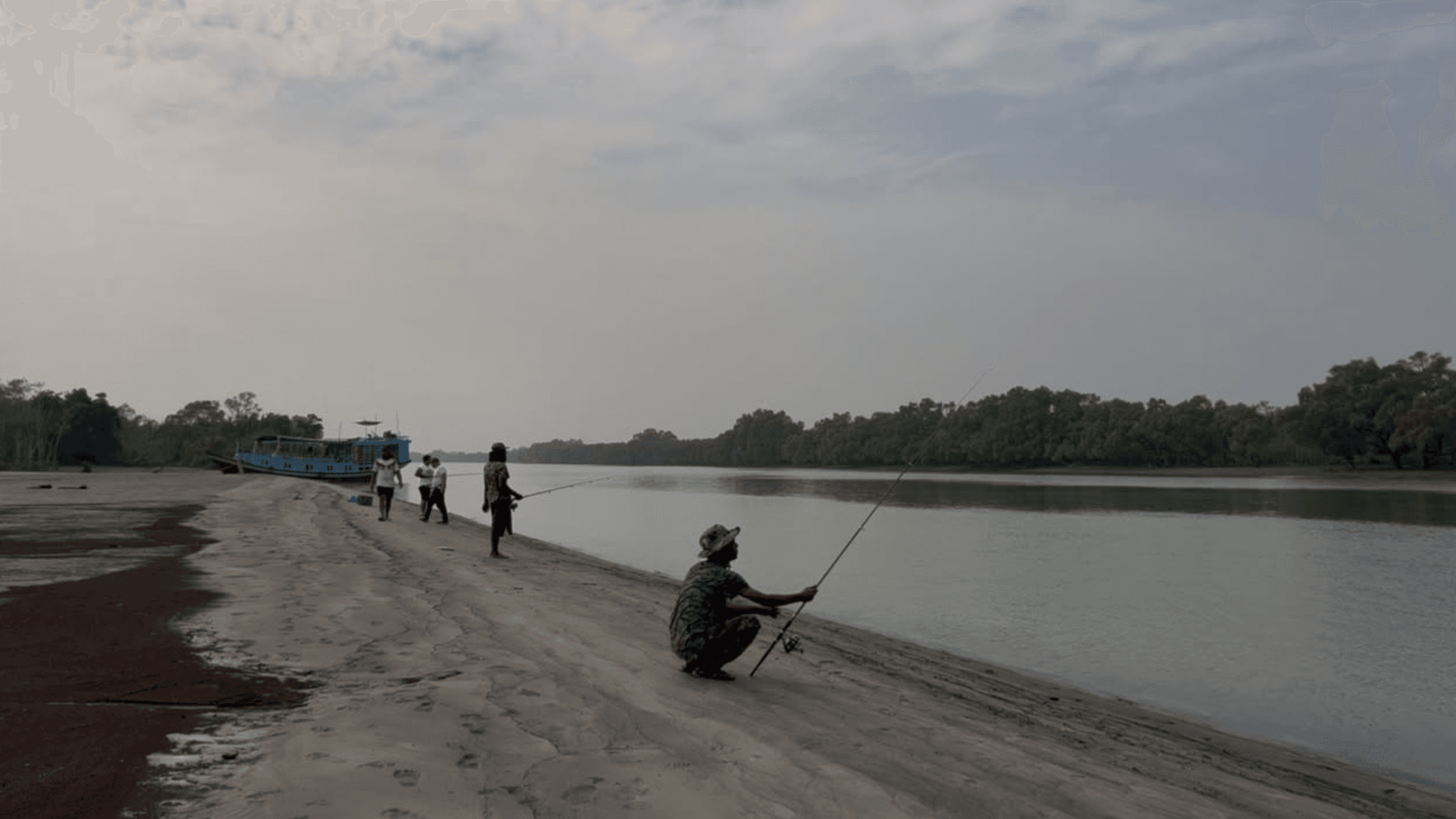
Mangrove Fishing
<p class="MsoBodyText" style="text-align: justify;"><span lang="EN">Fishing here is far more than a livelihood – it’s an ancient bond between people and the forest. For generations, Sundarbans villagers have learned to “read” these tidal waters, navigating by birds, moon, and mangrove cues. Mangrove Fishing lets travelers experience that bond firsthand. Accompanied by a seasoned local fisher (and usually a ranger or guide), guests glide through the maze of creeks at dawn. Instead of hurried angling, the focus is on the stillness: listening to the lapping water, watching the tide, and absorbing stories from a life lived on the river.</span></p> <p class="MsoBodyText" style="text-align: justify;"><strong><span lang="EN">The experience</span></strong><span lang="EN"><br>Meet your fishing guide at the village jetty before dawn. You’ll board a small country boat and drift into the mangrove labyrinth as the tide moves in. The fisherman will demonstrate traditional techniques – perhaps casting a net or checking simple traps – and explain how catch locations and timing depend on tides and seasons. Along the way you’ll keep watch for wildlife: kingfishers and eagles often circle above, schools of fish pass by, and even the occasional estuarine crocodile (from a safe distance) may slip under the boat. Your guides move carefully to protect the habitat and keep you safe – lifejackets are worn, and everyone stays seated. The mood is patient and unhurried: there’s no real “catch quota” to meet, so you can simply observe. At the end of the trip, return to shore with a deeper understanding of a way of life closely tied to the forest’s rhythms.</span></p> <p class="MsoBodyText" style="text-align: justify;"><strong><span lang="EN">At a glance</span></strong></p> <p class="Compact" style="margin-left: 0.5in; text-indent: -0.25in; text-align: justify;"><!-- [if !supportLists]--><span lang="EN" style="font-family: Symbol; mso-fareast-font-family: Symbol; mso-bidi-font-family: Symbol;"><span style="mso-list: Ignore;">·<span style="font: 7.0pt 'Times New Roman';"> </span></span></span><!--[endif]--><strong><span lang="EN">Early start:</span></strong><span lang="EN"> Meet at the village dock before sunrise.</span></p> <p class="Compact" style="margin-left: 0.5in; text-indent: -0.25in; text-align: justify;"><!-- [if !supportLists]--><span lang="EN" style="font-family: Symbol; mso-fareast-font-family: Symbol; mso-bidi-font-family: Symbol;"><span style="mso-list: Ignore;">·<span style="font: 7.0pt 'Times New Roman';"> </span></span></span><!--[endif]--><strong><span lang="EN">Boat ride:</span></strong><span lang="EN"> Drift through mangrove creeks with the incoming tide.</span></p> <p class="Compact" style="margin-left: 0.5in; text-indent: -0.25in; text-align: justify;"><!-- [if !supportLists]--><span lang="EN" style="font-family: Symbol; mso-fareast-font-family: Symbol; mso-bidi-font-family: Symbol;"><span style="mso-list: Ignore;">·<span style="font: 7.0pt 'Times New Roman';"> </span></span></span><!--[endif]--><strong><span lang="EN">Fishing demo:</span></strong><span lang="EN"> Observe local netting and trapping methods.</span></p> <p class="Compact" style="margin-left: 0.5in; text-indent: -0.25in; text-align: justify;"><!-- [if !supportLists]--><span lang="EN" style="font-family: Symbol; mso-fareast-font-family: Symbol; mso-bidi-font-family: Symbol;"><span style="mso-list: Ignore;">·<span style="font: 7.0pt 'Times New Roman';"> </span></span></span><!--[endif]--><strong><span lang="EN">Reflection:</span></strong><span lang="EN"> Return with insights into Sundarbans culture.</span></p> <p class="FirstParagraph" style="text-align: justify;"><strong><span lang="EN"><br>Why it matters</span></strong></p> <p class="Compact" style="margin-left: 0.5in; text-indent: -0.25in; text-align: justify;"><!-- [if !supportLists]--><span lang="EN" style="font-family: Symbol; mso-fareast-font-family: Symbol; mso-bidi-font-family: Symbol;"><span style="mso-list: Ignore;">·<span style="font: 7.0pt 'Times New Roman';"> </span></span></span><!--[endif]--><strong><span lang="EN">Generational wisdom:</span></strong><span lang="EN"> Sundarbans fishers inherit a deep knowledge of tides, weather, and wildlife. They read subtle signs – from bird behavior to moonlight patterns – to know when and where to fish. This ancestral knowledge sustains their community.</span></p> <p class="Compact" style="margin-left: 0.5in; text-indent: -0.25in; text-align: justify;"><!-- [if !supportLists]--><span lang="EN" style="font-family: Symbol; mso-fareast-font-family: Symbol; mso-bidi-font-family: Symbol;"><span style="mso-list: Ignore;">·<span style="font: 7.0pt 'Times New Roman';"> </span></span></span><!--[endif]--><strong><span lang="EN">Sustainable livelihood:</span></strong><span lang="EN"> Fishing here follows the seasons and local rules. Families harvest only what’s needed, ensuring fish stocks and mangrove nursery habitats remain healthy. In fact, the Sundarbans provides sustainable livelihoods for millions, including generations of fishermen</span><span lang="EN">.</span></p> <p class="Compact" style="margin-left: 0.5in; text-indent: -0.25in; text-align: justify;"><!-- [if !supportLists]--><span lang="EN" style="font-family: Symbol; mso-fareast-font-family: Symbol; mso-bidi-font-family: Symbol;"><span style="mso-list: Ignore;">·<span style="font: 7.0pt 'Times New Roman';"> </span></span></span><!--[endif]--><strong><span lang="EN">Living landscape:</span></strong><span lang="EN"> Mangrove Fishing shows the Sundarbans as a lived-in environment, not just a wild park. Guests see how people and nature co-exist: daily life revolves around tides and creeks. This firsthand glimpse contrasts with merely “viewing” nature from afar.</span></p> <p class="Compact" style="margin-left: 0.5in; text-indent: -0.25in; text-align: justify;"><!-- [if !supportLists]--><span lang="EN" style="font-family: Symbol; mso-fareast-font-family: Symbol; mso-bidi-font-family: Symbol;"><span style="mso-list: Ignore;">·<span style="font: 7.0pt 'Times New Roman';"> </span></span></span><!--[endif]--><strong><span lang="EN">Rich biodiversity:</span></strong><span lang="EN"> The waterways teem with life – the Sundarbans is home to an exceptional range of wildlife. There are over 693 animal species in the forest (including 210 species of fish</span><span lang="EN">, along with vibrant birdlife. Experiencing fishing here highlights why conservation matters to those who depend on the waters.</span></p>
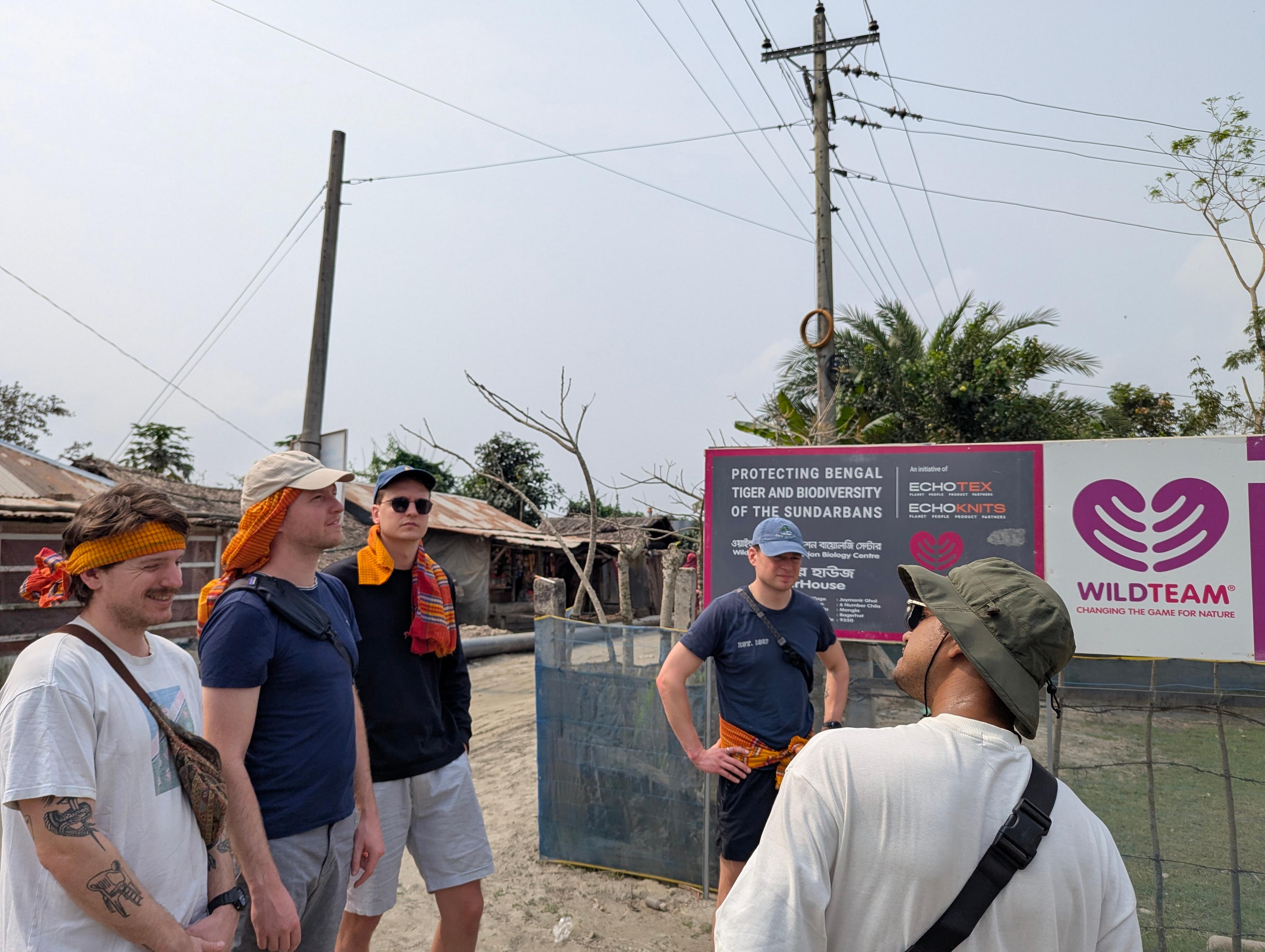
Mangrove Village Walk
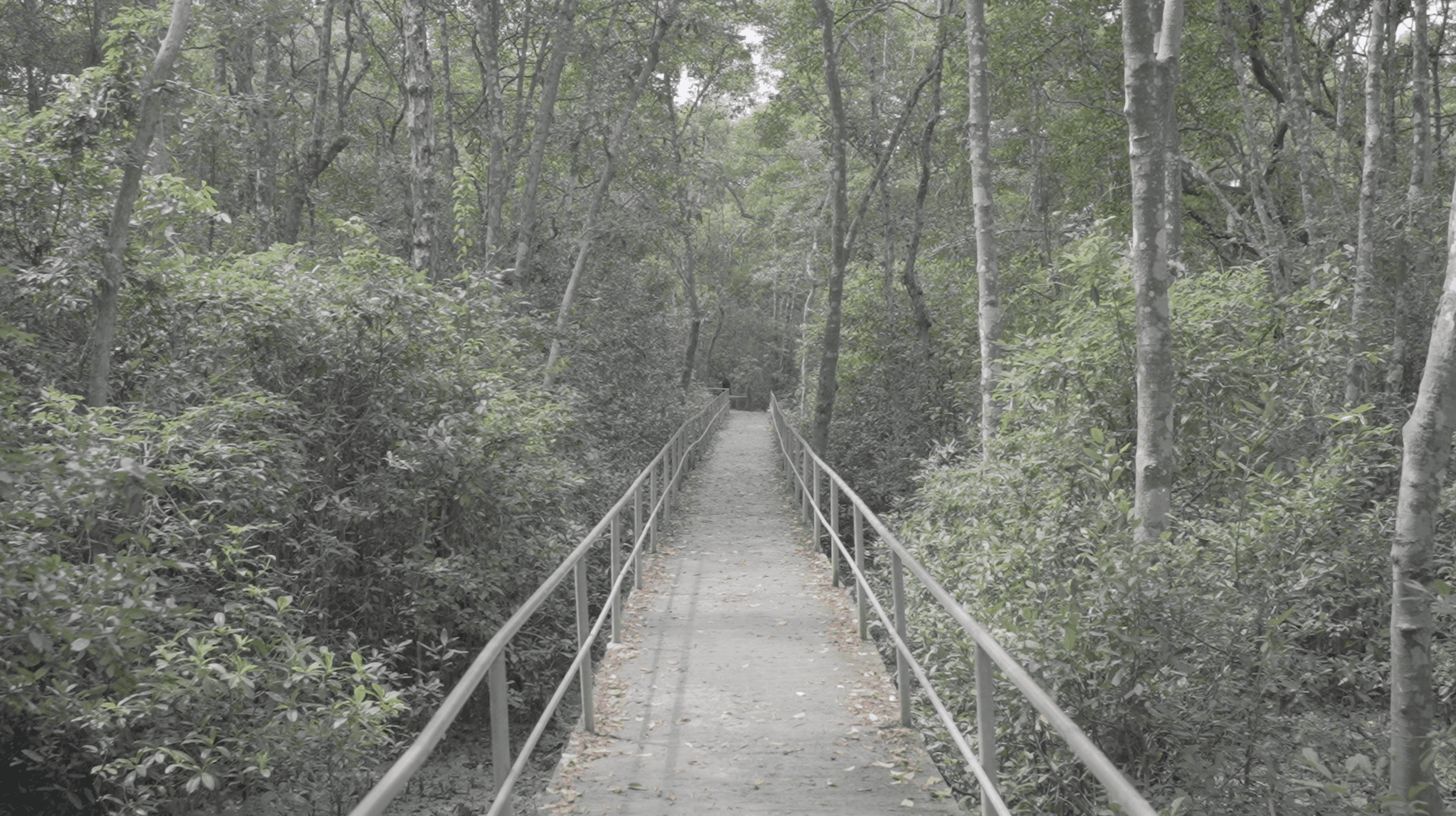
<p style="text-align: justify;">The Sundarbans is not only a wilderness of mangrove forests and tidal rivers; it is also home to communities whose lives, livelihoods and traditions are deeply connected to this unique landscape. A Mangrove Village Walk offers travelers an opportunity to step beyond the waterways and explore the human side of the delta.</p> <p style="text-align: justify;">Accompanied by a local guide, travelers walk through forest-fringe settlements, narrow village paths and riverside neighbourhoods, discovering how people live alongside one of the world's largest mangrove forests. Along the way, they may encounter traditional houses, fishing activities, local markets, household gardens and everyday village life.</p> <p style="text-align: justify;">Depending on the destination, the walk can also introduce travelers to the cultural heritage and traditional knowledge of local communities, including the Munda people, their relationship with the forest, Bonbibi folklore, traditional food and stories passed down through generations.</p> <p style="text-align: justify;">More than a sightseeing experience, the walk creates an opportunity to meet local residents, listen to their stories and understand how communities navigate the opportunities and challenges of living beside a dynamic mangrove ecosystem. It offers a closer look at the relationship between people, rivers and forests that shapes life in the Sundarbans.</p> <div style="text-align: justify;"> </div> <h3 style="text-align: justify;"><strong>MAJHI activity portfolio classification</strong></h3> <div style="text-align: justify;"> <div> <table> <tbody> <tr> <th> <p>Attribute</p> </th> <th> <p>Description</p> </th> </tr> <tr> <td> <p><strong>Activity name</strong></p> </td> <td> <p>Mangrove Village Walk</p> </td> </tr> <tr> <td> <p><strong>Category</strong></p> </td> <td> <p>Community & Cultural Experiences</p> </td> </tr> <tr> <td> <p><strong>Environment</strong></p> </td> <td> <p>Forest-fringe villages and riverside settlements</p> </td> </tr> <tr> <td> <p><strong>Experience type</strong></p> </td> <td> <p>Guided cultural and community exploration</p> </td> </tr> <tr> <td> <p><strong>Guide</strong></p> </td> <td> <p>Local community guide</p> </td> </tr> <tr> <td> <p><strong>Duration</strong></p> </td> <td> <p>Depends on the destination and itinerary</p> </td> </tr> </tbody> </table> </div> </div> <h3 style="text-align: justify;"><strong>Suggested experience variations</strong></h3> <p style="text-align: justify;">These can be offered as destination-specific experiences under the same activity:</p> <ol style="text-align: justify;"> <li> <div> <div> <p><strong>Munda Community Walk</strong> – Discover Munda settlements, traditional lifestyles, cultural heritage and community stories.</p> </div> </div> </li> <li> <div> <div> <p><strong>Bonbibi Heritage Walk</strong> – Explore the folklore, beliefs and cultural traditions associated with Bonbibi and the forest.</p> </div> </div> </li> <li> <div> <div> <p><strong>Fishing Village Walk</strong> – Understand traditional fishing practices and the livelihoods shaped by the tidal waterways.</p> </div> </div> </li> <li> <div> <div> <p><strong>Forest-F fringe Livelihood Walk</strong> – Discover how local households depend on and adapt to the surrounding mangrove landscape.</p> </div> </div> </li> </ol> <div id="D3161620_401C_4C6D_FE33_917ECEE7A56D" style="text-align: justify;"></div>
Mangrove Story Session
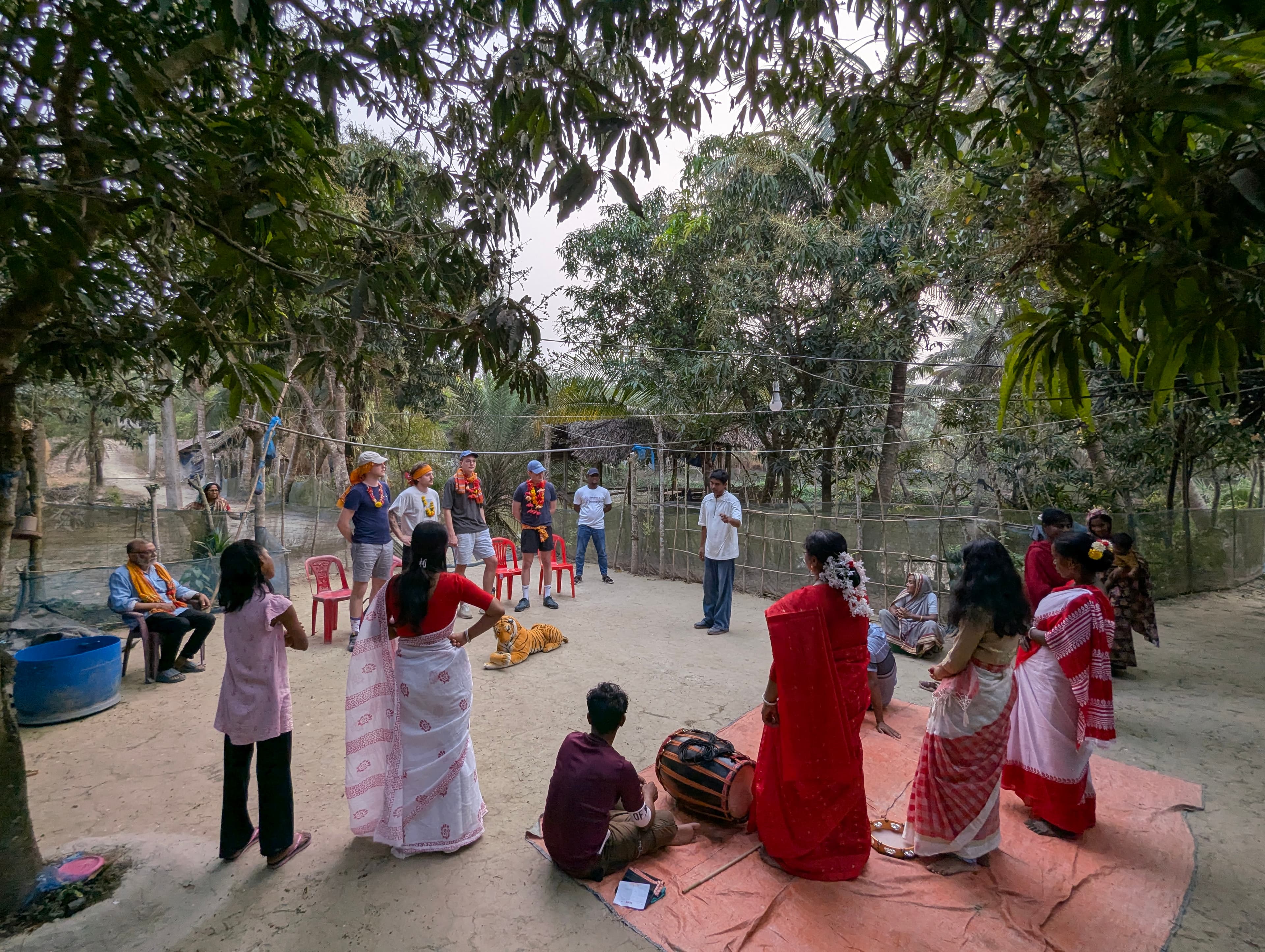
<p dir="ltr" style="text-align: justify;">For generations, the communities of the Sundarbans (honey gatherers, fishers and woodcutters) have ventured into the mangrove maze to sustain their families. Their world is shared with the Royal Bengal tiger, and local life depends on a delicate balance between survival and deep respect for nature. From this raw boundary comes the delta’s most enduring spiritual tradition: the Legend of Bonobibi.</p> <p dir="ltr" style="text-align: justify;">In this four-hour session, the legend is not explained to you. It is performed. Local artists bring it to life as Bonobibi Jatra, a form of traditional open-air folk theatre.</p> <p dir="ltr" style="text-align: justify;"><strong>Background: the legend of Bonobibi</strong></p> <p dir="ltr" style="text-align: justify;">In delta folklore, Bonobibi and her brother Shah Jongoli were sent to the Sundarbans to protect vulnerable forest-goers from Dakkhin Rai, a powerful demonic entity who embodies greed, raw nature and the spirit of the tiger.</p> <p dir="ltr" style="text-align: justify;">The most famous chapter tells of Dukhe, a poor young boy betrayed and abandoned in the deep jungle by an avaricious honey trader named Dhona. Facing certain death at the hands of Dakkhin Rai, Dukhe remembers his mother’s counsel and calls out to Bonobibi, who intervenes to rescue him and restore balance.</p> <p dir="ltr" style="text-align: justify;">Far beyond a miraculous tale, the Bonobibi narrative serves as the moral compass of the delta. It teaches restraint, equity and respect for the natural world.</p> <p dir="ltr" style="text-align: justify;"><strong>At a glance</strong></p> <div style="text-align: justify;"> <div dir="ltr" tabindex="0" role="group" aria-label="Code"> <div> <div> </div> </div> <div> <pre><code> [ THE GUARDIAN OF THE MANGROVE ] Human Necessity Greed & Exploitation (Dukhe / Local Villagers) vs. (Dhona / Human Arrogance) | | +-----------------+------------------+ | [ Dakkhin Rai ] (Tiger Spirit & Raw Wilderness) | [ Divine Intervention ] (Bonobibi & Shah Jongoli Arrive) | * Restores Balance & Protection * * Demands Restraint & Respect *</code></pre> </div> </div> </div> <p dir="ltr" style="text-align: justify;"><strong>The experience</strong></p> <p dir="ltr" style="text-align: justify;">This four-hour immersive session translates living folklore into Bonobibi Jatra. Rather than learning about the delta through static exhibits or guide presentations, travelers experience the legend as a living art form.</p> <p dir="ltr" style="text-align: justify;">Local artists bring the conflict to life through traditional instruments, stylized gestures, elaborate costumes, dramatic dialogue and emotive folk songs. The performance creates a shared cultural space, connecting ancient spiritual beliefs with the daily realities of frontline mangrove life.</p> <p dir="ltr" style="text-align: justify;"><strong>Cultural perspective: why Bonobibi matters</strong></p> <ul dir="ltr" style="text-align: justify;"> <li><strong>Cross-faith harmony.</strong> Bonobibi is uniquely venerated by both Hindu and Muslim forest communities. She transcends religious divides and embodies a shared human need for protection in an unpredictable landscape.</li> <li><strong>Preservation of living heritage.</strong> Supporting local Jatra troupes creates sustainable economic opportunities for traditional folk artists and keeps centuries-old oral storytelling vibrant within the community.</li> <li><strong>Understanding the cultural landscape.</strong> The session reframes the Sundarbans from a mere wildlife sanctuary into a deeply human, spiritual landscape shaped by generations of shared memory.</li> </ul> <p dir="ltr" style="text-align: justify;"><strong>Standard fields</strong></p> <div dir="ltr" style="text-align: justify;"> <table> <thead> <tr> <th scope="col">Field</th> <th scope="col">Value</th> </tr> </thead> <tbody> <tr> <td>Type</td> <td>Culture</td> </tr> <tr> <td>Tide mode</td> <td>Not tide-dependent (to be confirmed per venue)</td> </tr> <tr> <td>Access</td> <td>To be confirmed (venue and how guests reach it)</td> </tr> <tr> <td>Duration</td> <td>4 hours</td> </tr> <tr> <td>Language</td> <td>To be confirmed (performance language and guide translation)</td> </tr> <tr> <td>Site requirement</td> <td>Open-air space for the performance, plus local troupe booked in advance</td> </tr> <tr> <td>Tag</td> <td>To be set by you (Included / Add-On)</td> </tr> <tr> <td>Local partners</td> <td>Local Jatra troupe and artists</td> </tr> <tr> <td>Wildlife</td> <td>Not applicable</td> </tr> </tbody> </table> </div> <hr> <p dir="ltr" style="text-align: justify;">Notes:</p> <ul dir="ltr"> <li style="text-align: justify;"><strong>Nothing cut.</strong> All of your overview, the legend, the diagram, the session description and the three “why it matters” points are in. I only reordered them so the narrative leads and the legend sits in its own block.</li> <li style="text-align: justify;"><strong>Fields to fill.</strong> Access, Language, Tag and tide are marked “to be confirmed”, because I don’t want to guess the venue or the format. Tell me the answers and I’ll complete the table.</li> <li style="text-align: justify;"><strong>Research.</strong> If you share your full research, I can add more depth to the Background and The experience blocks, for example the troupe, the order of the performance, or the instruments. I’d keep any claims you haven’t confirmed marked as such.</li> <li style="text-align: justify;"><strong>Other activities.</strong> I can now rewrite Mud Walk, Boat Safari and Mangrove Archaeological Discovery in this v2 structure so all four match.</li> </ul>
Dingghy Safari
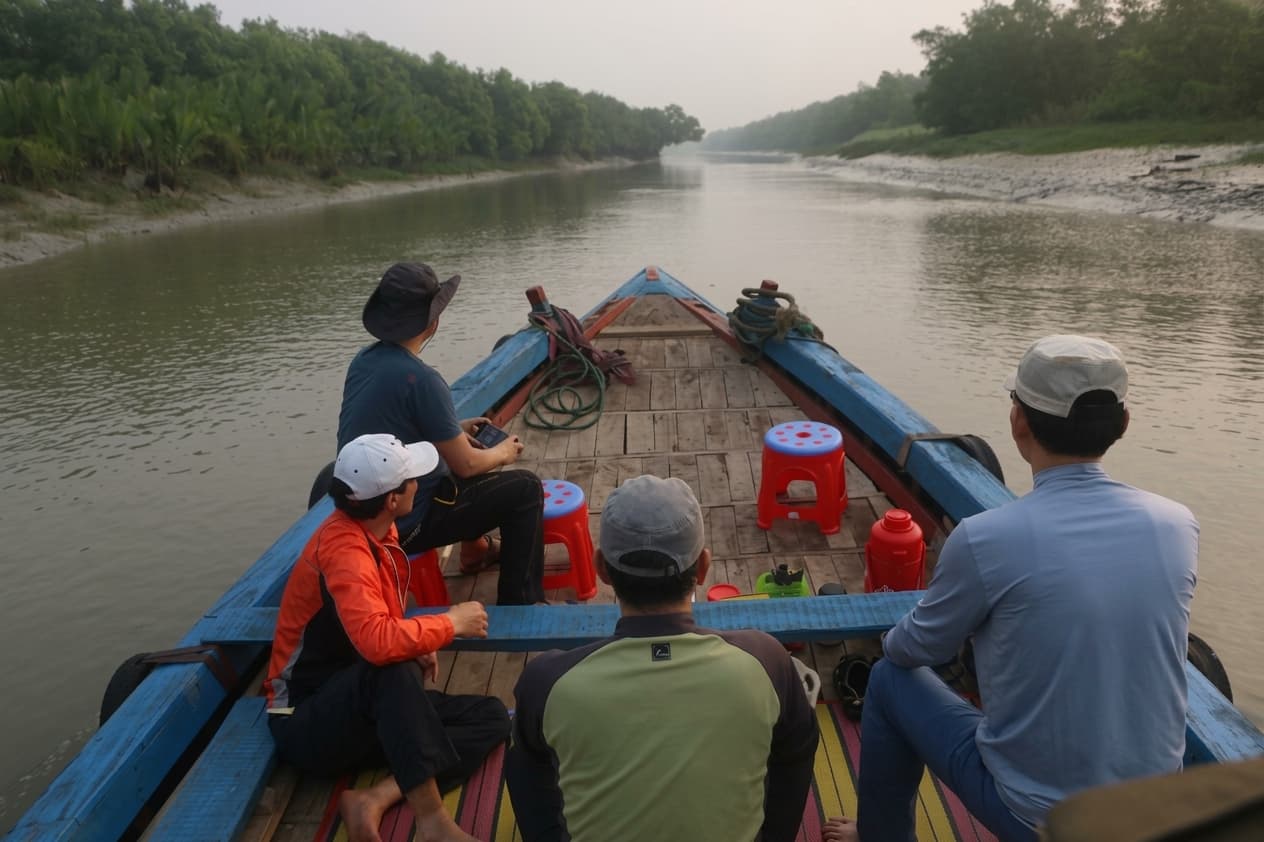
<p>The Sundarbans is woven together by an intricate network of rivers, canals and narrow tidal creeks. While the mother vessel carries the expedition through wider waterways, many of the forest's smaller channels remain beyond its reach. This is where a traditional wooden country boat, locally known as a dinghy, becomes the gateway to a closer exploration of the mangroves.</p> <p>During a Dinghy Safari, travelers board a locally operated wooden boat and venture into narrow canals where the surrounding forest comes within arm's reach. Moving quietly through the waterways, the dinghy offers a different perspective of the mangrove landscape. Its smaller size allows the team to navigate selected creeks, observe the intricate mangrove roots and explore waterways that larger vessels cannot enter.</p> <p>The journey is an opportunity to look for wildlife along the banks and among the vegetation. Kingfishers may appear on low branches, water monitors can sometimes be spotted near the water's edge, and crocodiles may rest along muddy banks. The quieter pace also creates opportunities to notice smaller details of the forest, from tidal marks and crab holes to the movement of fish beneath the water.</p> <p>Accompanied by experienced local boatmen and expedition guides, travelers can learn about the changing waterways, mangrove ecology and the wildlife that inhabits these narrow channels. Every creek has its own character, shaped by the tides, vegetation and natural conditions of the forest.</p> <p>A Dinghy Safari is not simply a transfer from one place to another. It is an opportunity to leave the main waterways behind and experience the Sundarbans at a slower, closer and more intimate pace.</p> <div id="DC8D3EC6_2043_51D8_2C1D_27DFD32768FC" style="text-align: justify;"></div> <div id="DC8D3EC6_2043_51D8_2C1D_27DFD32768FC"></div> <div id="DC8D3EC6_2043_51D8_2C1D_27DFD32768FC"></div>

Mangrove Sound Therapy
<p class="text-token-text-primary leading-relaxed" style="text-align: justify;">Immerse yourself in the Sundarbans’ soundscape. Sit with the guide in a quiet mangrove clearing and listen deeply to nature’s orchestra – birds, insects, wind and water – as you relax and reflect. A mindful, wellness-focused exploration of the forest’s sounds.</p> <p class="text-token-text-primary leading-relaxed" style="text-align: justify;"><em>Audience:</em> It’s an inclusive wellness activity (walking required is minimal, mostly seated or standing quietly) and can be booked as a standalone excursion or add-on to a river expedition. It is not clinical therapy but a guided meditation-with-sound that supports stress relief and environmental awareness.*</p> <p class="text-token-text-primary leading-relaxed" style="text-align: justify;"> </p> <p class="text-token-text-primary leading-relaxed" style="text-align: justify;"><strong>Key Facilitation Points:</strong></p> <ul class="text-token-text-primary ml-3 list-disc space-y-2 leading-relaxed" style="text-align: justify;"> <li class="text-token-text-primary leading-relaxed">Encourage <em>“deep listening”</em> without judgment; remind participants it’s normal for minds to wander.</li> <li class="text-token-text-primary leading-relaxed">Use soft-spoken, calm voice (almost a whisper) to maintain quiet.</li> <li class="text-token-text-primary leading-relaxed">Walk carefully to adjust position of group or equipment.</li> <li class="text-token-text-primary leading-relaxed">Stay aware of any wildlife signs (e.g. tiger growl) – explain quietly but prioritize safety (everyone freeze/move back if needed).</li> <li class="text-token-text-primary leading-relaxed">Do <strong>not</strong> use music or man-made sounds. The activity is about <em>forest sounds only</em>.</li> </ul> <p class="text-token-text-primary leading-relaxed" style="text-align: justify;"><strong>Group Size & Timing:</strong></p> <ul class="text-token-text-primary ml-3 list-disc space-y-2 leading-relaxed" style="text-align: justify;"> <li class="text-token-text-primary leading-relaxed"><strong>Recommended Group:</strong> 4–10 participants. Small groups (<8) allow intimacy and easier silence.</li> <li class="text-token-text-primary leading-relaxed"><strong>Duration:</strong> ~40 minutes total (including brief intro/discussion). Adapt to fit tour schedule.</li> <li class="text-token-text-primary leading-relaxed"><strong>Best Time:</strong> Early morning or dusk for active wildlife sounds; avoid midday quiet if few sounds. Dry season preferred for accessibility (less rain noise).</li> <li class="text-token-text-primary leading-relaxed"><strong>Location:</strong> A sheltered forest clearing or boardwalk in the Sundarbans (not on moving boat to avoid engine noise).</li> </ul> <h2 id="4-research-summary" class="text-token-text-primary scroll-mt-24 text-[16pt] leading-[1.3] font-semibold" style="text-align: justify;">Research Summary</h2> <ul class="text-token-text-primary ml-3 list-disc space-y-2 leading-relaxed" style="text-align: justify;"> <li class="text-token-text-primary leading-relaxed"> <p class="text-token-text-primary leading-relaxed"><strong>Soundscape Ecology & Conservation:</strong> Natural environments have characteristic <em>soundscapes</em> made of biophony (animals), geophony (wind, water), and anthropophony (human noise). Soundscape ecology studies these acoustic patterns and how organisms use them. Undisturbed soundscapes are crucial for wildlife (many species rely on sound cues) and human well-being; in fact, preserving natural soundscapes is now a recognized conservation goal. This underscores the value of exposing travelers to an intact mangrove soundscape.</p> </li> <li class="text-token-text-primary leading-relaxed"> <p class="text-token-text-primary leading-relaxed"><strong>Soundwalking & Mindful Listening:</strong> The “soundwalk” is a well-known practice of walking (or sitting) with the purpose of <em>listening deeply</em>. As H. Westerkamp describes, it’s any outing whose main goal is to expose the ears to environmental sounds. In mindfulness literature, focusing attention on sensory experience (sounds, breath, etc.) is shown to reduce rumination and stress. By deliberately focusing on ambient sounds, participants experience heightened presence and relaxation – a form of meditation.</p> </li> <li class="text-token-text-primary leading-relaxed"> <p class="text-token-text-primary leading-relaxed"><strong>Well-being Evidence:</strong> A growing body of research shows that immersion in nature reduces stress and improves mood. For example, studies of Japanese <em>shinrin-yoku</em> (“forest bathing”) found that forest exposure lowers cortisol (stress hormone), blood pressure, anxiety and even depression. One review concluded that forest therapy “engages multiple senses” and helps direct attention away from negative thoughts, leading to a more positive mental state. Similarly, experimental psychology shows that listening to natural sounds (birds, streams) supports cognitive function and relaxation, whereas urban noise disrupts it. For instance, exposure to traffic noise significantly reduced memory performance, while listening to nature sounds maintained or improved recall.</p> </li> <li class="text-token-text-primary leading-relaxed"> <p class="text-token-text-primary leading-relaxed"><strong>Sound as Therapy:</strong> Clinical sound meditation (singing bowls, gongs, etc.) also reduces anxiety and depression. A controlled study found that a single 30-minute Tibetan singing-bowl session produced significant drops in tension, anger and depressed mood, and increased feelings of well-being. This suggests that structured “sound healing” experiences can have measurable psychological benefits. Our Mangrove Sound Immersion adapts this principle to the natural context, using the forest’s own “instruments.”</p> </li> <li class="text-token-text-primary leading-relaxed"> <p class="text-token-text-primary leading-relaxed"><strong>Local Ecological Insight:</strong> Local guides and communities in the Sundarbans possess deep acoustic awareness. For example, honey-hunters and fishermen traditionally listen for birds and insects that indicate seasonal changes or tiger presence. They know that certain birdcalls only occur when the tides recede, or that calm can suddenly shatter with a tiger’s roar. Incorporating this indigenous knowledge (e.g. explaining why we hear more cicadas at dusk) enriches the session. (Direct citations from local studies were not found, but this approach aligns with community-based tourism best practices.)</p> </li> </ul> <div id="DC8D3EC6_2043_51D8_2C1D_27DFD32768FC" style="text-align: justify;"></div>
Honey Hunting
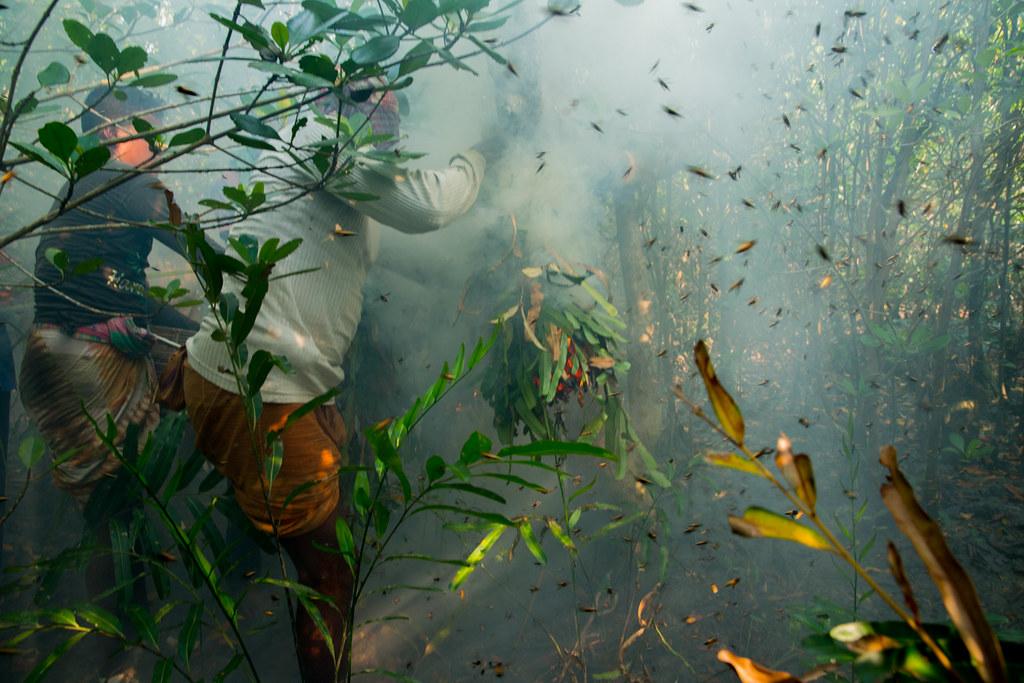
<p>For generations, communities living along the edge of the Sundarbans have ventured into the forest to collect wild honey. Known locally as <em>Mouals</em>, these traditional honey hunters carry generations of inherited knowledge about the forest, its flowering trees, the movement of wild bees and the places where they build their hives. For many families, honey collection remains an important seasonal livelihood, connecting village life directly to the natural rhythms of the mangroves.</p> <p>Accompanied by an experienced honey-hunting team, travelers can venture into the forest and learn how the Mouals search for wild beehives. Watch how they read the signs of the forest, observe the movement of bees and identify potential nesting sites among the mangrove trees. When a hive is located, the team demonstrates the traditional honey collection process, including the careful use of smoke to move the bees away before collecting the honey.</p> <p>But the experience goes far beyond the search for a beehive. It opens a window into the lives of people who depend on the forest and understand its changing seasons, tides, plants and wildlife. Along the way, the honey hunters share stories of their journeys, inherited practices, forest beliefs and the challenges of making a living in one of the world's most remarkable wilderness areas.</p> <p>The Sundarbans is also the natural habitat of the Royal Bengal Tiger. For the Mouals, entering the forest means working in a landscape where the presence of this apex predator is an ever-present reality. Their stories reveal a complex relationship between people and the forest: one shaped by livelihood, respect, risk, traditional beliefs and generations of experience.</p> <p>From the search for wild bees to the stories of village life, honey hunting offers a rare opportunity to understand how human communities and the mangrove wilderness are connected.</p> <p><strong>Follow the Mouals into the forest and discover the stories behind the honey of the Sundarbans.</strong></p> <div id="DC8D3EC6_2043_51D8_2C1D_27DFD32768FC"></div>
Forest Pond Bath
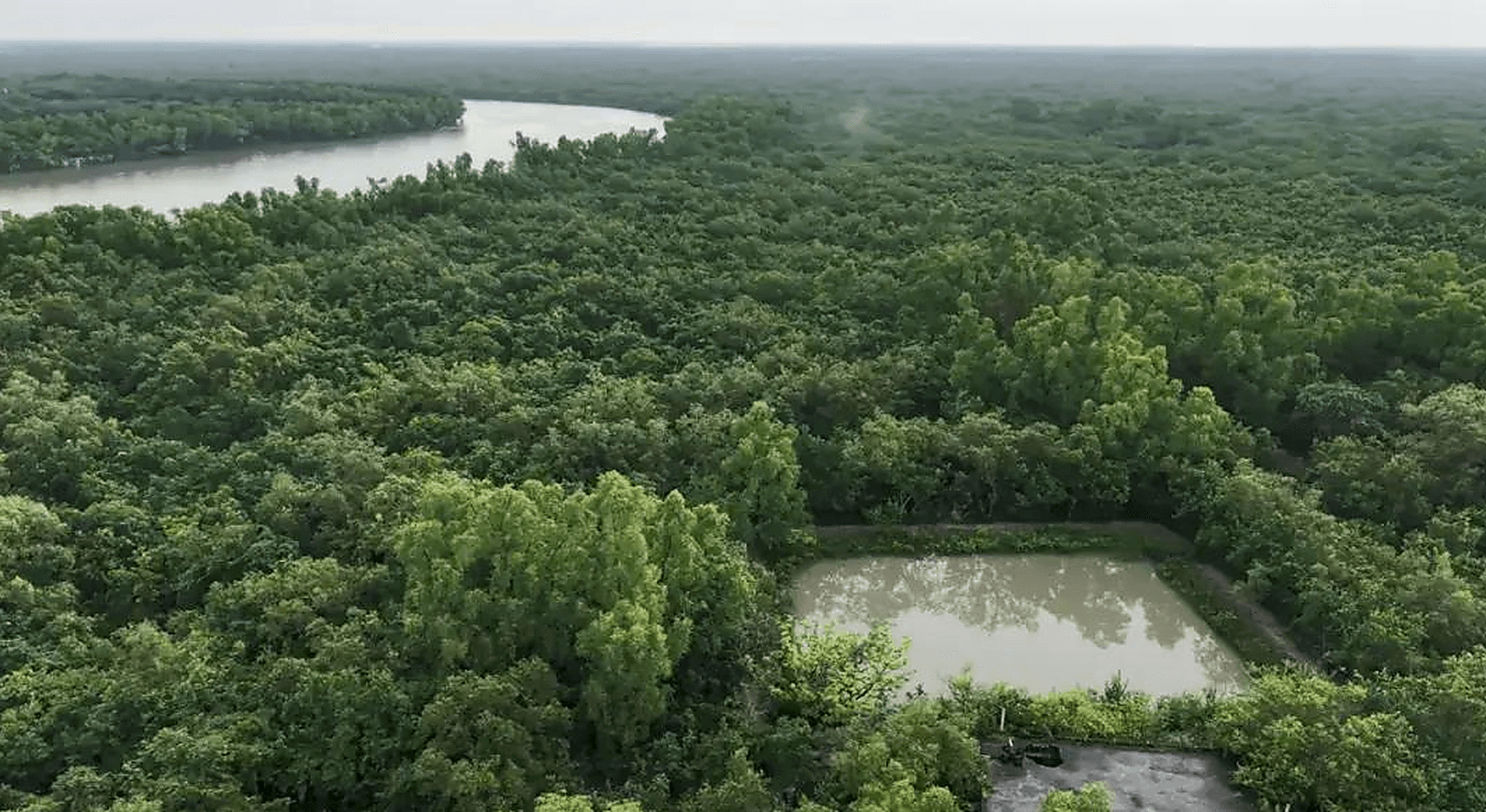
<p style="text-align: justify;">Freshwater is a rare resource in the Sundarbans, where saltwater rivers and tidal creeks dominate the landscape. To provide freshwater for forest personnel, the Forest Department has excavated ponds at several forest stations and locations throughout the forest.</p> <p style="text-align: justify;">During a multi-day expedition, travelers may have the opportunity to visit one of these forest ponds and enjoy a refreshing freshwater bath. Surrounded by mangrove vegetation, with the sounds of the forest all around, it is a simple yet memorable experience that offers a different perspective on life deep inside the Sundarbans.</p>
Creek Safari
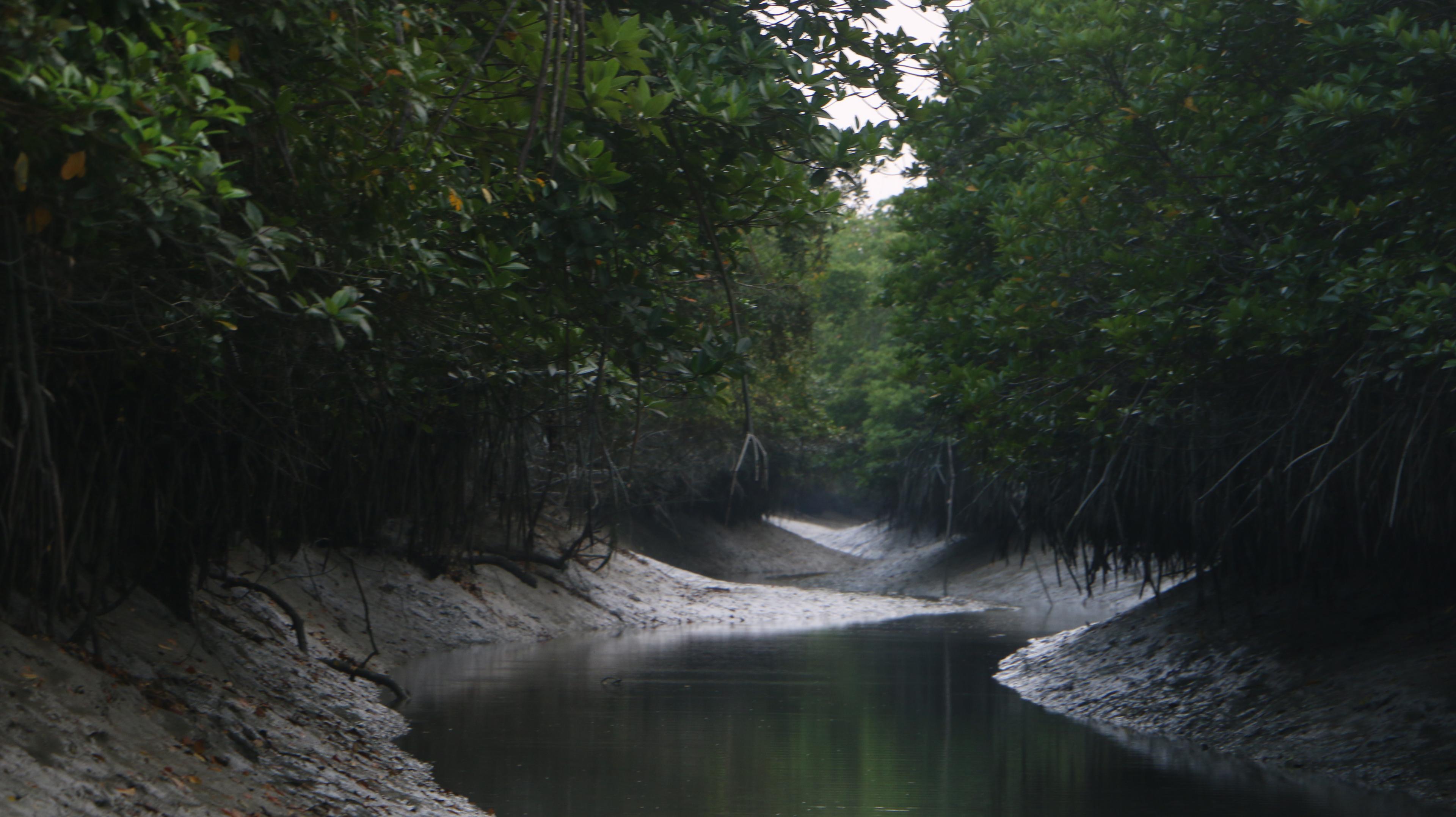
<p dir="ltr" style="text-align: justify;">Boarding a low-impact wooden tender craft, you enter narrow interior tidal channels unreachable by larger vessels. The engine is disengaged, and the skiff drifts silently on the tide beneath a dense mangrove canopy.</p> <p dir="ltr" style="text-align: justify;">In that silence, the forest comes closer. You can observe riverbank wildlife, mudflat dynamics and canopy birds without causing acoustic disturbance, and hear what the forest sounds like when nothing is running.</p> <p dir="ltr" style="text-align: justify;"><strong>The experience</strong></p> <p dir="ltr" style="text-align: justify;">When the waterways become too narrow for the main expedition vessel, the safari continues on this smaller craft into the deeper creeks. Your guide steers you in, cuts the engine, and lets the tide carry you. Move slowly and quietly, and let the forest settle around you.</p> <p dir="ltr" style="text-align: justify;"><strong>Distinction for MAJHI</strong></p> <p dir="ltr" style="text-align: justify;">Boat Safari takes place aboard the main expedition vessel in narrower rivers and forest channels. Dinghy Safari takes over when the waterways become too narrow for that vessel, using a smaller boat to reach the deeper creeks.</p> <p dir="ltr" style="text-align: justify;"><strong>Ecological perspective</strong></p> <ul dir="ltr" style="text-align: justify;"> <li>Interior channels are the quietest part of the forest, so a silent craft shows wildlife that would never appear near an engine.</li> <li>The tide moves the boat and shapes the mudflats, which is why you see the banks change as the water rises or falls.</li> <li>The canopy overhead is a habitat of its own, and birds are most visible and audible from the water in these narrow channels.</li> <li>Mudflat dynamics show how the forest builds and reshapes its edges, tide by tide.</li> <li>A low-impact craft with no engine noise leaves almost no disturbance behind, which is what lets you see natural behavior.</li> </ul> <p dir="ltr" style="text-align: justify;"><strong>Standard fields</strong></p> <div dir="ltr" style="text-align: justify;"> <table> <thead> <tr> <th scope="col">Field</th> <th scope="col">Value</th> </tr> </thead> <tbody> <tr> <td>Type</td> <td>Nature</td> </tr> <tr> <td>Tide mode</td> <td>Drifts with the tide; route planned around water level</td> </tr> <tr> <td>Vessel</td> <td>Low-impact wooden tender craft</td> </tr> <tr> <td>Access</td> <td>By tender from the main expedition vessel, into narrow interior channels</td> </tr> <tr> <td>Duration</td> <td>To be fixed by you</td> </tr> <tr> <td>Language</td> <td>To be confirmed</td> </tr> <tr> <td>Site requirement</td> <td>Channel too narrow for the main vessel but deep enough for the tender at that tide; route confirmed per day</td> </tr> <tr> <td>Tag</td> <td>To be set by you (Included / Add-On)</td> </tr> <tr> <td>Local partners</td> <td>Guide and boat operator</td> </tr> <tr> <td>Wildlife</td> <td>Riverbank wildlife, mudflat life and canopy birds (commonly seen, none guaranteed)</td> </tr> </tbody> </table> </div> <hr> <p dir="ltr" style="text-align: justify;">Notes:</p> <ul dir="ltr"> <li style="text-align: justify;"><strong>Tide mode.</strong> I wrote this as drifting with the tide, since you said so. If some channels can only be entered at a particular tide, tell me and I’ll state it.</li> <li style="text-align: justify;"><strong>Group size.</strong> A tender holds few people. If you have a standard number per boat, I can add it as a field.</li> <li style="text-align: justify;"><strong>Old wording.</strong> Your phrase “without causing acoustic disturbance” stays in the About block. I can also use it as the tagline if you prefer something more technical.</li> </ul> <div id="DC8D3EC6_2043_51D8_2C1D_27DFD32768FC"></div> <div id="D3161620_401C_4C6D_FE33_917ECEE7A56D"></div>
Sunset Experience
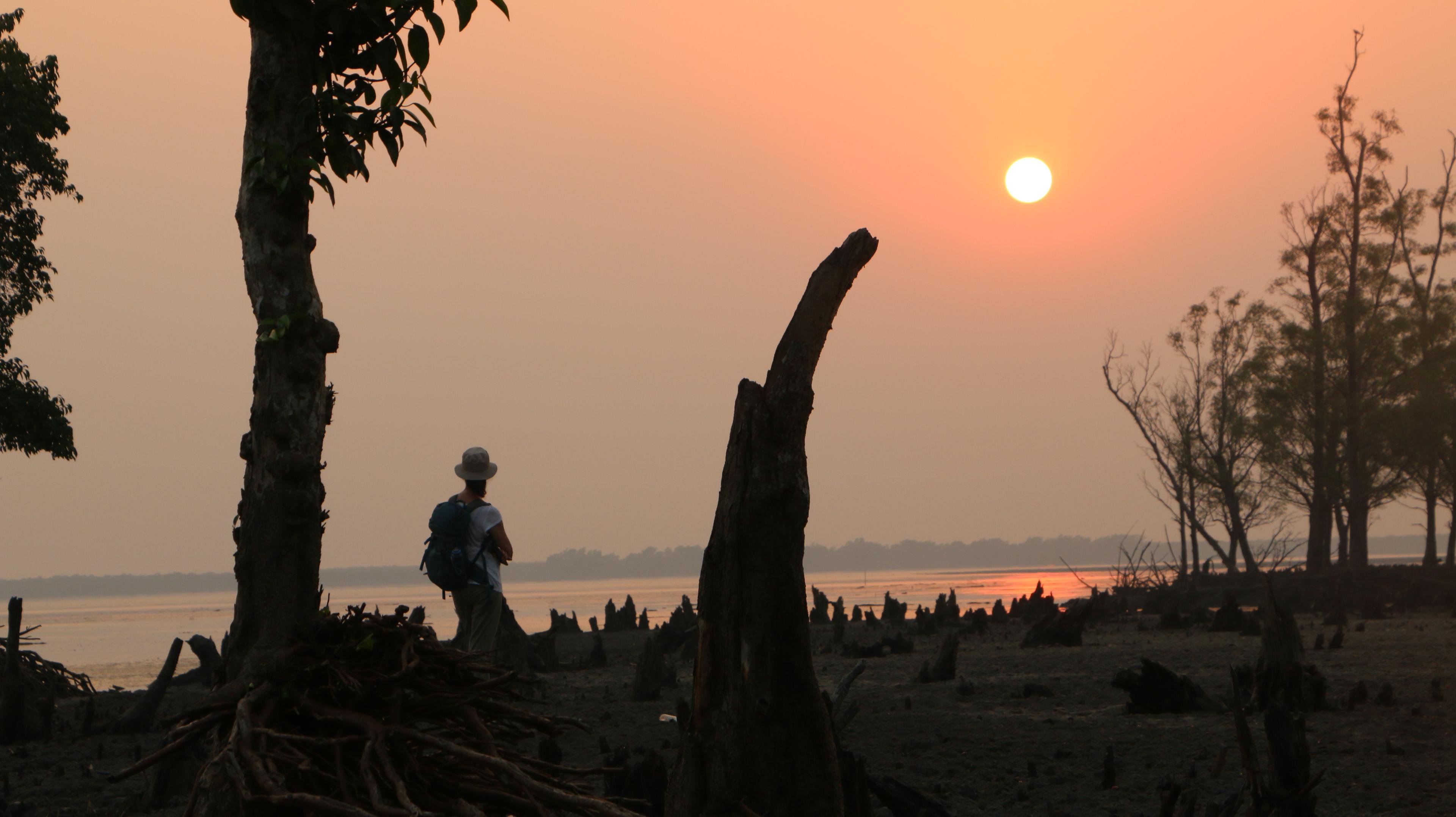
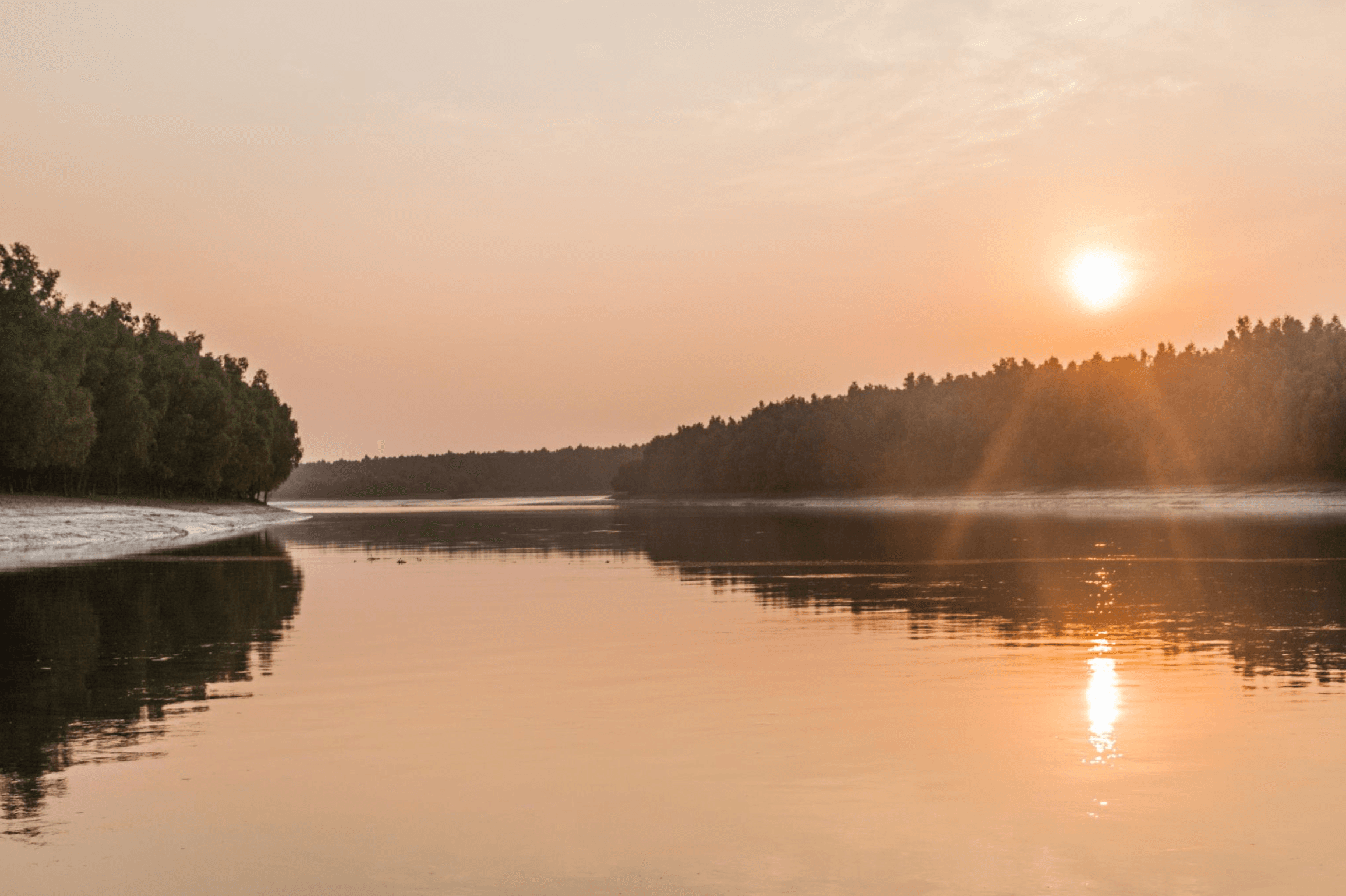
<p style="text-align: justify;">Witness the changing light as the sun descends over the delta. The river, mangrove canopy and open horizon take on shifting colours as daylight fades. This is an opportunity to slow down, appreciate the landscape and observe the transition from day to evening in the mangrove environment.</p> <div id="DC8D3EC6_2043_51D8_2C1D_27DFD32768FC"></div>

Mangrove Folk & POT Performance
<p> </p> <div id="DC8D3EC6_2043_51D8_2C1D_27DFD32768FC"></div>

Mud Walk
<p dir="ltr" style="text-align: justify;">At low tide the river pulls back and leaves a wide, glistening shore of soft mud. Your dinghy lands at a firm spot on the bank, and your guide leads a short, slow walk along a route chosen for that day’s tide and ground.</p> <p dir="ltr" style="text-align: justify;">The mud is not one thing. Near the water it is slick and deep, and further in it firms up around the roots. You will feel it pull gently at each step, so you learn to walk the way the locals do: slowly, with shorter steps, placing each foot where the guide shows you. Your guide explains how to read the ground, which patches hold your weight, and which to avoid.</p> <p dir="ltr" style="text-align: justify;">Around you, the mud is moving. Mudskippers flick across the surface and prop themselves up on their fins. Small crabs retreat into burrows as you approach. Shorebirds and waders probe the flats for food, and the ground is covered in the tracks of animals that came before you.</p> <p dir="ltr" style="text-align: justify;"><strong>Ecological perspective</strong></p> <ul dir="ltr" style="text-align: justify;"> <li>Mangrove mud is oxygen-poor. That is why the trees grow breathing roots that rise out of it, and you will see them pushing up all around you.</li> <li>The mud is rich in organic matter from fallen leaves. Crabs, snails, and mudskippers break this material down, which feeds the whole estuary.</li> <li>Mudskippers are fish that live part of their lives out of water, using their skin and gill chambers to breathe. They are one of the clearest signs of a healthy tidal flat.</li> <li>The flats are feeding grounds for birds, and the tide decides when the food is exposed. Time on the mud follows the tide, not the clock.</li> <li>The mud also traps sediment and builds new land, which is how the delta keeps growing and protects the coast.</li> </ul> <p dir="ltr" style="text-align: justify;"><strong>Standard fields</strong></p> <div dir="ltr" style="text-align: justify;"> <table> <thead> <tr> <th scope="col">Field</th> <th scope="col">Value</th> </tr> </thead> <tbody> <tr> <td>Tide mode</td> <td>Low tide only</td> </tr> <tr> <td>Access</td> <td>Dinghy to a walkable bank or island, then on foot</td> </tr> <tr> <td>Duration</td> <td>To be fixed by you</td> </tr> <tr> <td>Site requirement</td> <td>Firm landing point, exposed flat, route confirmed per site</td> </tr> <tr> <td>Tag</td> <td>Add-On</td> </tr> <tr> <td>Wildlife</td> <td>Mudskippers, small crabs, shorebirds (all commonly seen, none guaranteed)</td> </tr> <tr> <td> </td> <td> </td> </tr> </tbody> </table> </div> <p style="text-align: justify;"> </p> <div id="DC8D3EC6_2043_51D8_2C1D_27DFD32768FC" style="text-align: justify;"></div> <div id="DC8D3EC6_2043_51D8_2C1D_27DFD32768FC"></div> <div id="DC8D3EC6_2043_51D8_2C1D_27DFD32768FC"></div>
Night Safari
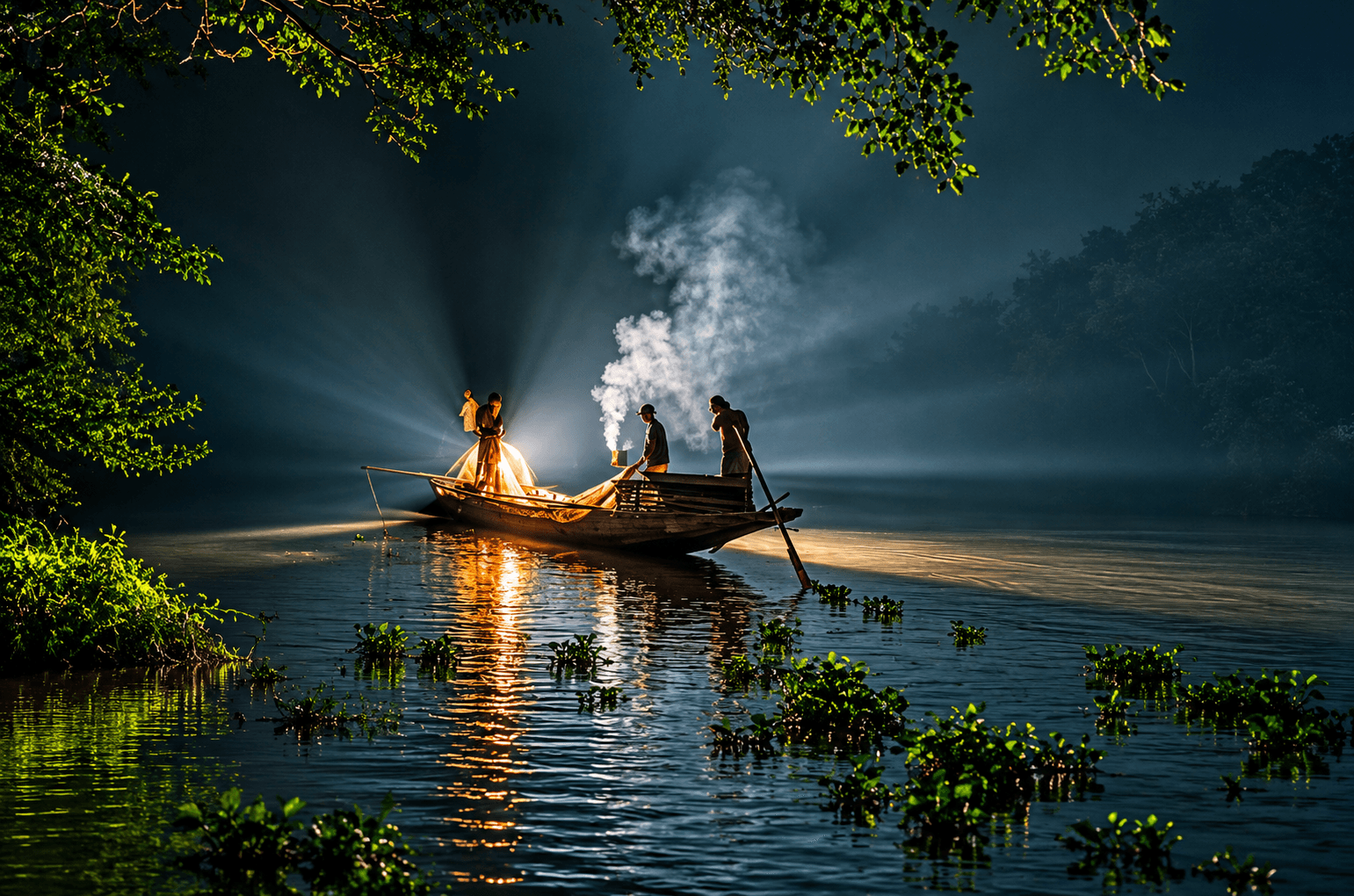
<p style="text-align: justify;">As daylight fades over the Sundarbans, the forest enters a different rhythm. The familiar landscape of tidal rivers and mangrove vegetation gradually disappears into darkness, revealing a world of nocturnal wildlife and sounds that often go unnoticed during the day.</p> <p style="text-align: justify;">A Night Safari takes travelers onto the forest waterways after sunset for a slow and attentive exploration of the mangrove wilderness. Aboard a suitable expedition boat, travelers navigate selected rivers and channels, looking along the riverbanks and forest edges for signs of wildlife. With carefully directed lighting, the expedition team may help identify nocturnal animals, including crocodiles, owls, fishing cats and other wildlife that become active after dark.</p> <p style="text-align: justify;">The experience is as much about listening as looking. The calls of nocturnal birds, movement in the surrounding vegetation, the occasional splash in the water and the reflections of the forest under the night sky create an atmosphere very different from a daytime safari.</p> <p style="text-align: justify;">Wildlife encounters are never guaranteed, and the experience depends on weather, tidal conditions, permitted routes and animal activity. The objective is to explore the forest respectfully without disturbing its nocturnal inhabitants.</p> <p style="text-align: justify;"><strong>Experience highlight:</strong> Discover the mysterious nighttime world of the Sundarbans through a quiet journey along its dark tidal waterways.</p> <div style="text-align: justify;"> </div> <h3 style="text-align: justify;"><strong>MAJHI activity portfolio classification</strong></h3> <div style="text-align: justify;"> <div> <table> <tbody> <tr> <th> <p>Attribute</p> </th> <th> <p>Description</p> </th> </tr> <tr> <td> <p><strong>Activity name</strong></p> </td> <td> <p>Night Safari</p> </td> </tr> <tr> <td> <p><strong>Category</strong></p> </td> <td> <p>Wildlife Exploration</p> </td> </tr> <tr> <td> <p><strong>Environment</strong></p> </td> <td> <p>Tidal rivers, channels and mangrove edges</p> </td> </tr> <tr> <td> <p><strong>Transport</strong></p> </td> <td> <p>Suitable expedition boat</p> </td> </tr> <tr> <td> <p><strong>Experience type</strong></p> </td> <td> <p>Nocturnal wildlife exploration</p> </td> </tr> <tr> <td> <p><strong>Best time</strong></p> </td> <td> <p>After sunset</p> </td> </tr> <tr> <td> <p><strong>Duration</strong></p> </td> <td> <p>Depends on the expedition itinerary</p> </td> </tr> </tbody> </table> </div> </div> <p style="text-align: justify;"> </p> <div id="D3161620_401C_4C6D_FE33_917ECEE7A56D" style="text-align: justify;"></div>
Sunrise Experience
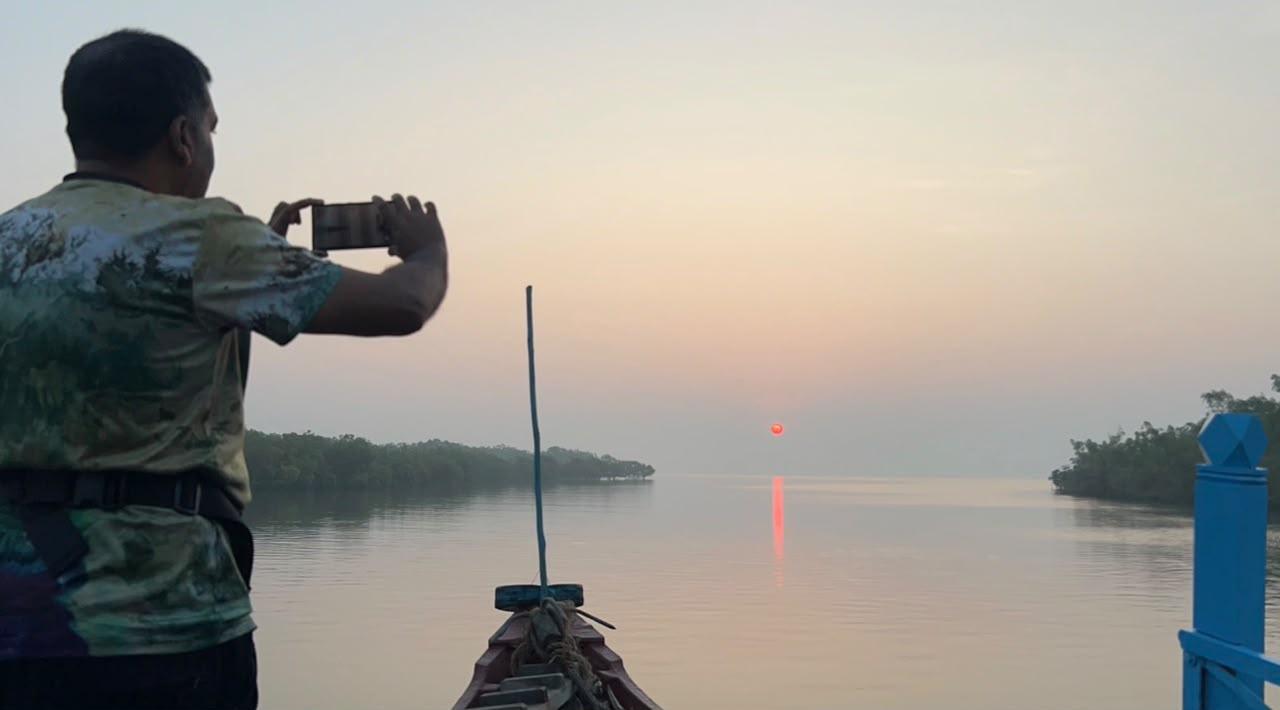
<p style="text-align: justify;">Experience the transition from night to day as the first light emerges over the mangrove landscape. Observe the changing colours of the sky, the awakening waterways and the gradual return of activity across the forest and riverbanks. The experience invites travelers to pause, observe and connect with the delta at the beginning of a new day.</p> <div id="DC8D3EC6_2043_51D8_2C1D_27DFD32768FC"></div>
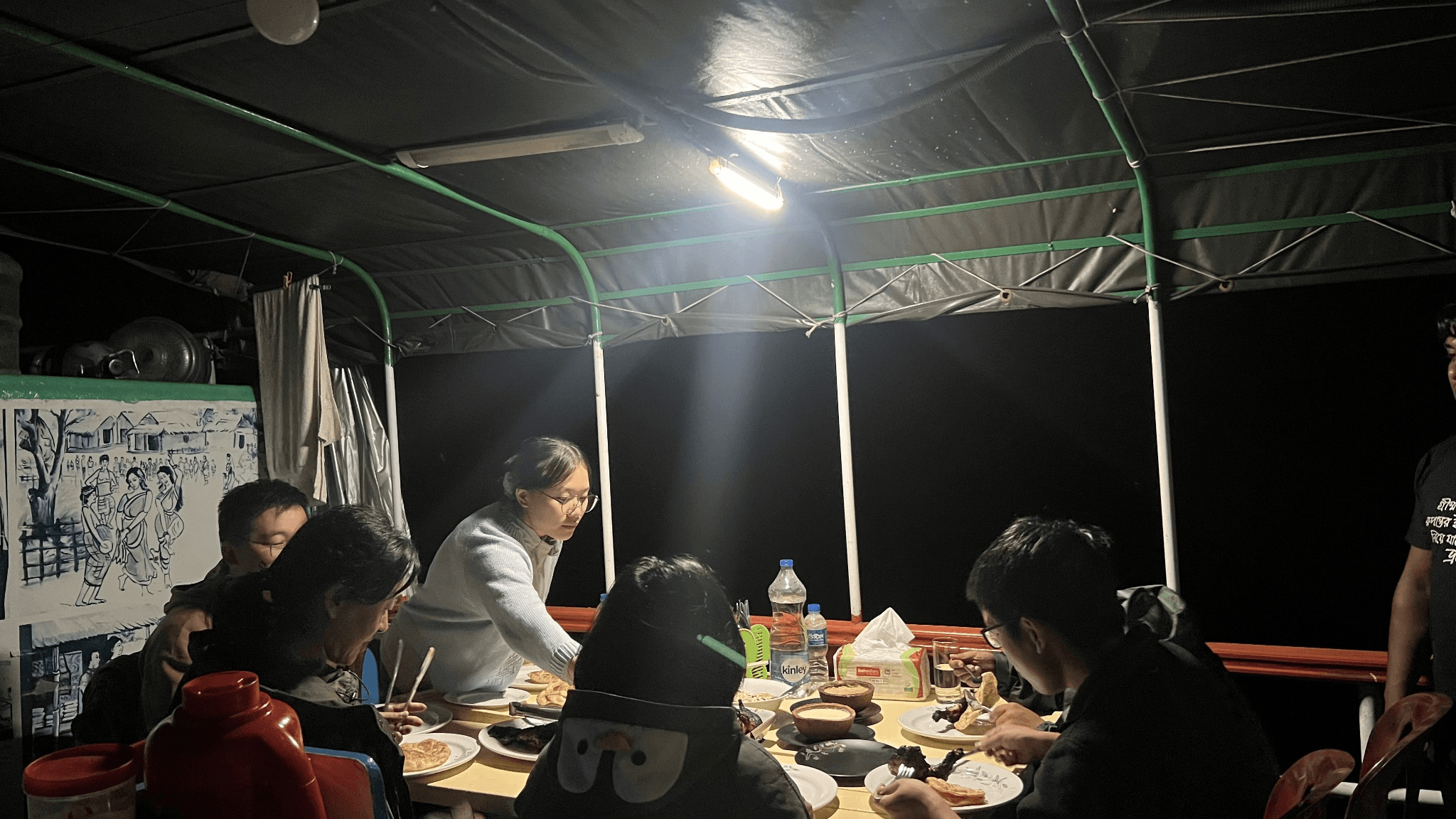
Jungle Feast
<p style="text-align: justify;" data-pm-slice="1 1 []">Discover the flavours of the Sundarbans through an immersive fishing and culinary experience surrounded by the mangrove landscape. Try your hand at catching fish from the waterways, then turn your catch into a memorable feast with the help of our experienced crew; or take part in preparing the meal yourself.</p> <p style="text-align: justify;">The experience celebrates the region's rich food culture, from freshly grilled fish barbecue featuring local favourites such as koral to fragrant fish curries, prawn preparations and traditional bhorta made with local ingredients. Depending on the catch and seasonal availability, your feast may also draw inspiration from coastal specialities such as chingri bhorta, shutki bhorta, kakra (crab) preparations and other beloved regional dishes. Enjoy your meal with steaming rice, seasonal vegetables, dal and local accompaniments, prepared in a style that reflects the culinary traditions of the coast.</p> <p style="text-align: justify;">Whether you are tending the fire, learning a local cooking technique, sharing recipes with the crew or simply savouring a freshly prepared meal beside the mangrove waterways, this is an experience that brings together fishing, food and the landscape in which they belong.</p> <p style="text-align: justify;"><strong>Catch from the water. Cook with local hands. Share the flavours of the Sundarbans.</strong></p> <div id="DC8D3EC6_2043_51D8_2C1D_27DFD32768FC" style="text-align: justify;"></div> <div id="DC8D3EC6_2043_51D8_2C1D_27DFD32768FC" style="text-align: justify;"></div>
Dinner with Mangrove Community
<p>Dinner with Munda Community</p>
About Dhangmari Khal
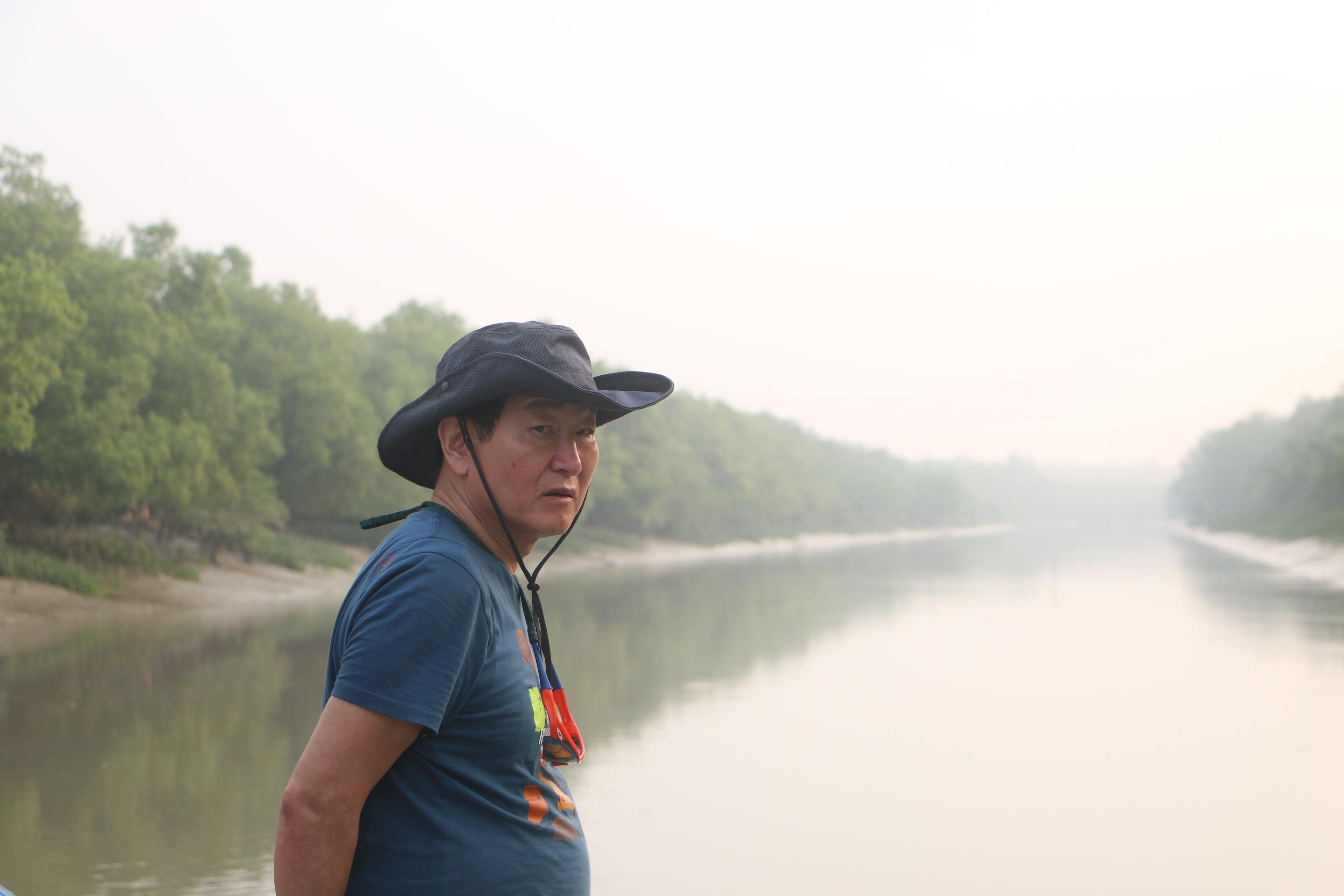
Dhangmari Khal runs between the Sundarbans and the neighbouring settlements of Purbo Dhangmari and Paschim Dhangmari in Banishanta Union, Dacope, Khulna. The channel forms a natural boundary between the mangrove forest and village life, where fishing, crab collection and other forest-linked livelihoods shape the relationship between people and the Sundarbans.
Dhangmari is also part of a designated wildlife sanctuary for Ganges River and Irrawaddy dolphins. Beyond its ecological importance, the villages are known for their Bonbibi tradition, reflecting the beliefs and stories of communities living beside the forest. Exploring Dhangmari offers a chance to experience both sides of this landscape: the tidal waterways of the Sundarbans and the culture of the people who live along its edge.
Expedition Field Operations & Activities
-
Dhangmari Khal Dinghy Safari: Explore the channel by traditional dinghy, observing the mangrove boundary, village riverbanks and the changing landscape with the tide.
-
Dinghy Riding Workshop: Learn basic paddling, boat handling and navigation techniques from local boatmen, gaining practical insight into traditional travel through the delta.
-
Traditional Fishing with Local Fishers: Join local fishers to learn about traditional fishing gear, techniques and the influence of tidal conditions on their daily work.
-
Crab Catching Experience: Join local crab collectors to understand crab habitats, traditional catching methods and the importance of mangrove mudflats to local livelihoods.
-
Dhangmari Village Walk: Visit Purbo or Paschim Dhangmari with a local host to explore village life, local livelihoods, household practices and the community's relationship with the Sundarbans.
-
Bonbibi Story Session: Listen to local versions of the Bonbibi, Dukhe and Dakshin Rai stories, exploring the folklore and beliefs associated with entering and living beside the mangrove forest.
-
Dolphin Observation Safari: Explore permitted sections of the Dhangmari dolphin sanctuary and connected waterways to look for Ganges River and Irrawaddy dolphins. Sightings are not guaranteed; boats must follow sanctuary regulations and responsible wildlife-watching practices.
-
Community Homestay: Stay with a local host family to experience village life, traditional meals and conversations about livelihoods, culture and the Sundarbans.