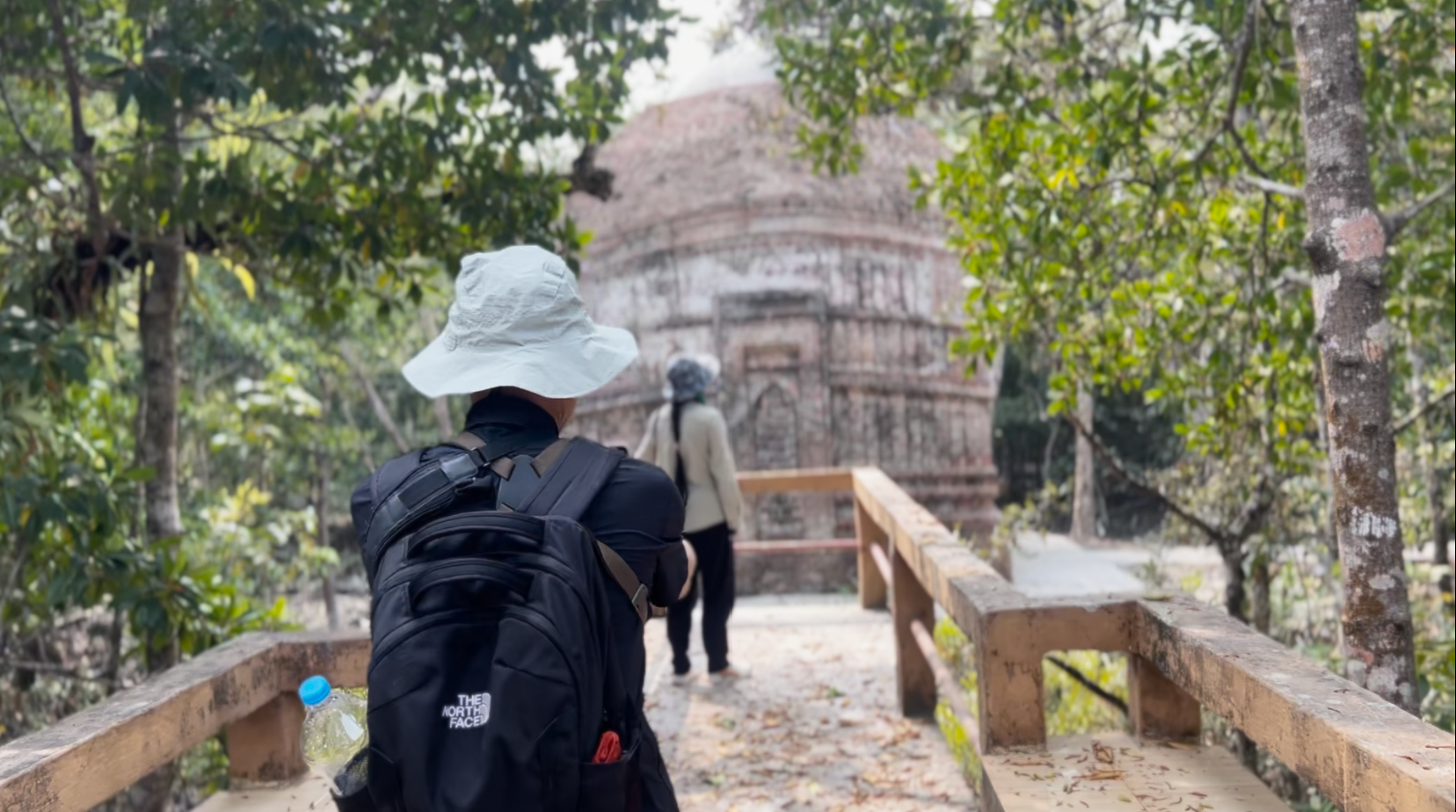
Guided mangrove archeology discovery
Explore the ruins, salt-making sites and temples hidden in the protected mangrove forest by boat or on foot, and discover how people and the forest once lived together.
Guided mangrove archeology discovery
Quick Facts
ACTIVITY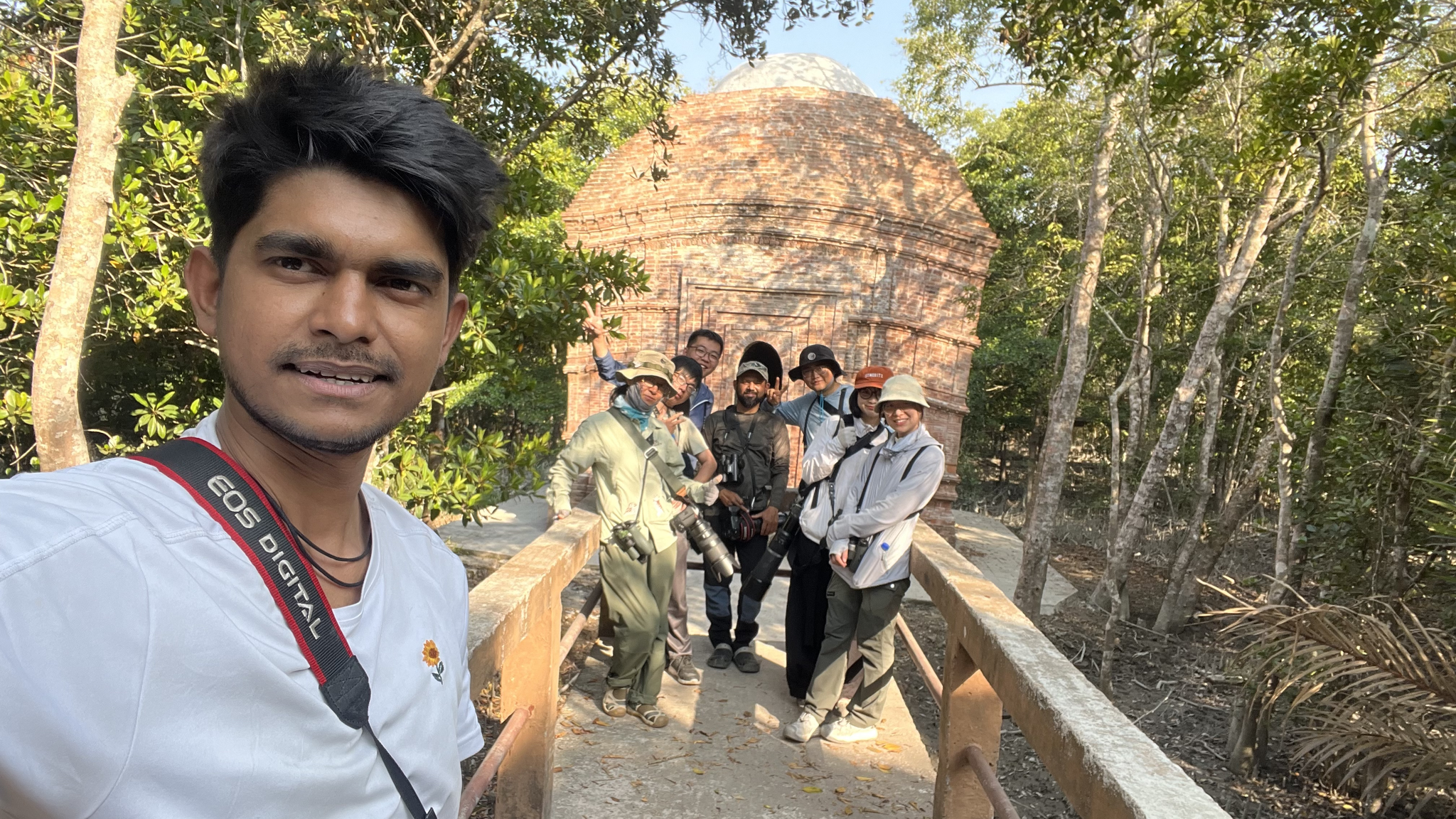
Click any thumbnail to view high-resolution fullscreen.
About Guided mangrove archeology discovery
The Sundarbans is a protected reserve forest today. Trees are not cut and wild animals are not harmed. People still fish its channels, but no one lives inside it as they once did. For centuries they did. They made salt from the mud, built forts to protect their ground, and raised temples in the middle of the trees.
This activity follows that story. Depending on the destination, you explore by boat along the channels people once used, on foot along a short route inland, or both. Your guide takes you slowly through the forest and explains what you are seeing: who worked here, how they made a living, and what daily life was like with the tides, the heat and the tigers.
What remains is often subtle. You may find the site of a salt kiln, a mound of earth, old brick, or the shape of a clearing. At some destinations there is more: a temple still standing among the roots. Your guide helps you read these signs and see how the forest grew back over them.
Nobody practices these ways any more, and some places are still being found as the rivers wear away their banks. Seeing them inside a protected forest is a way to understand how people and the forest once lived together, and why the forest is protected today.
History and ecological perspective
- Salt was a forest industry. It needed mud, fuel wood and fresh water, and it connected the delta to distant markets.
- Salt making meant cutting trees and burning mud. That is the kind of use the reserve now prevents, which is why the old sites matter.
- Forts and temples show that people stayed and defended their ground, not just passed through.
- The coast moved and the rivers shifted, which helps explain why places that once thrived were abandoned.
- Rivers are still uncovering new traces as banks erode, so the story is still being written.
Standard fields
| Field | Value |
|---|---|
| Tide mode | Route and landing chosen per day’s tide |
| Access | By boat, on foot, or both, depending on the destination |
| Duration | To be fixed by you |
| Site requirement | Safe landing or access point, route confirmed per destination, forest permission confirmed per site |
| Tag | Add-On |
| Story | Per destination (see below) |
| Wildlife | Birds and other forest wildlife along the route (commonly seen, none guaranteed) |
Destination block, filled in with two examples
| Field | Katka | Shekhertek |
|---|---|---|
| Story | Salt making | Fort, temple and faith |
| What remains | Remains of salt kilns and a mound called Tiger Hill | A standing brick temple and ruins of other structures |
| How to explore | Boat, then short walk | Boat, then a foot trail from the canal |
| Why it matters | Records salt making over roughly 1,000 years | A place where history and living belief meet |
| Notes for guide | Confirm access and tide window | Limited permission and trail; confirm status |
- Conducted directly at Sundarbans Reserve
- All safety equipment, specialized gear, and briefings provided on board
- Integrated seamlessly into your expedition itinerary
- Synchronized with daily tidal departures and anchorage schedules